

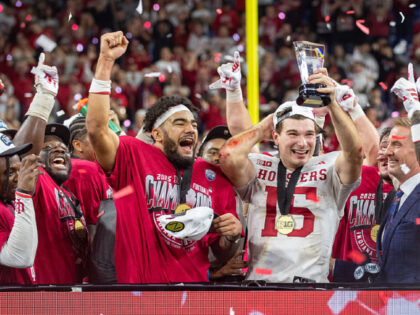
In a move that looks more like a power play than a policy fix, Senators from opposite sides of the aisle have cooked up a bipartisan bill aimed at reshaping college sports—yet the real story for gun owners lies in what this signals about federal overreach into private institutions. The legislation promises to impose new rules on athlete compensation, NIL deals, and conference governance, all under the banner of “fairness” and “protection.” But when Washington decides it can rewrite the operating manual for universities and athletic departments, it’s only a matter of time before similar logic is applied to other constitutionally protected spaces, including the right to keep and bear arms on campus. The same lawmakers who claim they’re safeguarding student-athletes could just as easily decide that “safety” requires restricting firearm ownership or training for those same students once they leave the field.
For the 2A community, this isn’t just another sports headline—it’s a warning shot about how regulatory creep works. College athletics already operate under layers of NCAA bureaucracy and now face the added weight of congressional mandates; if Congress can nationalize eligibility standards and revenue-sharing formulas, it can just as easily nationalize background-check expansions or storage requirements that bleed into private dorms and off-campus housing. The bill’s sponsors are framing their intervention as consumer protection, but history shows these “landmark reforms” rarely shrink once enacted—they metastasize. Gun owners who’ve watched campus carry victories get clawed back through administrative rules should recognize the pattern: federal leverage over education funding becomes federal leverage over every policy the institution touches.
The deeper implication is cultural. College sports remain one of the last mass-culture venues where individual excellence, merit, and unapologetic competition are still celebrated without apology. When politicians insert themselves to “level the playing field,” they erode exactly the values that underpin a strong Second Amendment culture—self-reliance, accountability, and the right to defend one’s own success. The 2A community should watch this bill closely, not because it mentions firearms, but because it demonstrates how quickly bipartisan consensus can turn private endeavor into regulated territory. If they’ll do it to touchdowns and scholarships, they’ll do it to the toolbox that protects everything else.


