

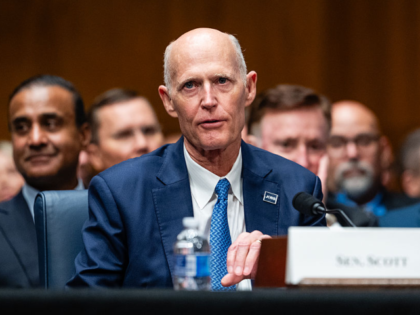
Sen. Rick Scott’s pointed accusation that Anthony Fauci is shielding himself behind an “autopen pardon” lands like a warning shot across the bow of institutional trust. The Florida Republican’s claim that the signature was executed by machine rather than by the president’s own hand raises a constitutional question that goes far beyond one man’s legal exposure: if the pardon itself is defective, then the immunity it supposedly confers is equally hollow. For Second Amendment advocates who have watched federal agencies weaponize regulatory “guidance” to sidestep congressional intent, the Fauci episode is a case study in how procedural shortcuts can be used to insulate officials from accountability—whether the issue is pandemic policy or the quiet expansion of ATF rules that redefine everyday firearms accessories as machine guns.
The deeper implication for gun owners is that the same administrative state now being challenged over pandemic-era edicts also writes the footnotes that turn pistol braces into felony offenses and bump stocks into contraband. When an agency can retroactively criminalize conduct that Congress never debated, the only real check left is the judiciary or, ultimately, the voters. Scott’s line of questioning underscores a growing bipartisan skepticism that federal scientists and regulators should be able to place themselves above scrutiny simply by obtaining a signature—autopen or otherwise. If that signature is later found to be legally infirm, the precedent could open the door to renewed congressional oversight of every alphabet agency whose rules touch on the right to keep and bear arms.
For the 2A community, the takeaway is straightforward: procedural integrity is not an academic concern; it is the difference between a lawfully owned firearm and an unexpected felony. As long as executive-branch officials can insulate themselves from questioning—whether through novel legal maneuvers or regulatory sleight-of-hand—the right to armed self-defense remains one bureaucratic reinterpretation away from becoming a crime. Scott’s confrontation with Fauci is therefore more than political theater; it is a reminder that the same forces seeking to evade accountability for one set of policies are often the same forces writing the rules that govern another.


