

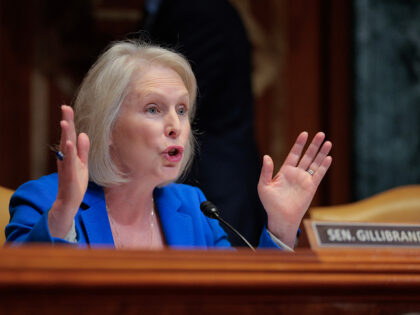
Sen. Kirsten Gillibrand’s warning that the SAVE Act might flag Hispanic surnames at the voter rolls sounds less like a sober policy critique and more like a calculated scare tactic designed to keep the citizenship-verification debate off the table. The bill simply requires documentary proof of citizenship—birth certificate, passport, or REAL ID compliant document—before someone registers to vote, a standard already applied to millions of Americans who board planes or purchase firearms. By framing routine identity checks as ethnic targeting, Gillibrand recycles the same “voter suppression” script that Democrats have used for years to oppose any measure that might expose non-citizen ballots, conveniently ignoring that legal Hispanic citizens already navigate these same documents without issue when they exercise their Second Amendment rights at a gun store.
For the 2A community the stakes are straightforward: an electorate whose eligibility cannot be verified is an electorate that can be flooded with voices hostile to the right to keep and bear arms. Every cycle we watch razor-thin margins decide statehouses that draw district lines, confirm judges, and set the tone for red-flag laws and magazine bans. If the SAVE Act’s minimal safeguard is painted as racist rather than routine, the same rhetorical weapon will be turned on universal background checks, permit-to-purchase schemes, and any future attempt to confirm that only law-abiding citizens—not prohibited persons or foreign nationals—are purchasing firearms. The pattern is clear: erode confidence in one constitutional right by smearing enforcement as bigotry, and every other enumerated right becomes easier to dilute.
The deeper implication is that Democrats appear more invested in preserving an unverifiable voter pool than in securing the integrity of the ballot box or the gun counter. When the same politicians who insist citizenship checks are “voter suppression” also push to expand the NICS database and close the mythical “gun show loophole,” the inconsistency becomes impossible to ignore. The 2A community should treat Gillibrand’s hyperbole as a warning shot: if basic proof of citizenship is too controversial for elections, it will be labeled equally controversial when applied to the fundamental right that protects all others.


