

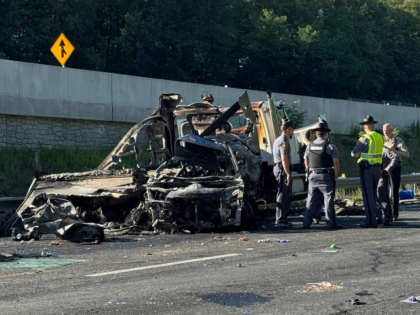
A non-English-speaking bus driver who obtained his commercial license in New York has been blamed for a horrific Virginia crash that claimed five lives, including children, and left 44 others injured. The incident underscores a troubling pattern: states with lax verification standards and multilingual testing accommodations are putting unqualified operators behind the wheel of heavy vehicles. When basic language proficiency and road-rule comprehension are treated as optional, the result is predictable tragedy on public roadways—yet the same political class quick to blame “guns” for every shooting remains conspicuously silent when regulatory failure and open-border policies produce mass-casualty events involving commercial transport.
For the 2A community, the lesson is straightforward: government competence, not citizen disarmament, is the real public-safety variable. Every time officials expand background-check databases or push “red flag” laws, they claim superior screening ability; yet the same bureaucracies cannot ensure that someone driving a 40-foot bus can read basic traffic signs in the language of the road. Law-abiding gun owners undergo fingerprints, interviews, and continuous federal checks simply to exercise a constitutional right, while commercial-driver standards in sanctuary jurisdictions appear to prioritize inclusion over competence. The contrast exposes the hypocrisy: if the state cannot reliably vet the people it licenses to operate multi-ton vehicles, its repeated demands to further restrict the people it has no constitutional authority to disarm ring hollow.
The broader implication is that culture and assimilation matter. English proficiency is not bigotry; it is the baseline for operating in a high-trust, high-speed society where split-second decisions depend on shared understanding. When political correctness overrides that requirement, the body count rises—whether on interstates or, historically, in any domain where skill and clarity are subordinated to ideology. The 2A community should seize this moment to reframe the safety debate: instead of more gun control layered atop bureaucratic failure, demand rigorous, uniform standards for every licensed activity, from concealed carry to commercial driving. Only then will officials confront the actual sources of preventable death rather than the politically convenient ones.


