

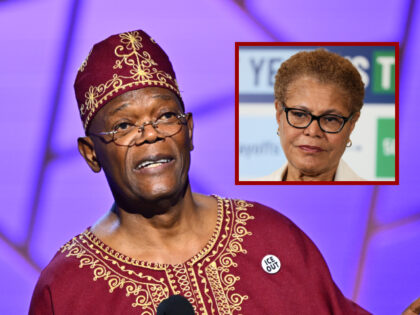
Samuel L. Jackson’s endorsement of Karen Bass for reelection as Los Angeles mayor is more than a celebrity photo-op; it’s a reminder that Hollywood’s loudest voices still shape the political environment that decides whether law-abiding Angelenos can defend themselves. Bass’s record—support for the city’s convoluted permitting maze, her reluctance to confront smash-and-grab retail theft, and her alignment with Sacramento’s magazine and “assault weapon” restrictions—has already produced a two-tier system: criminals ignore the rules while compliant residents navigate red tape and shrinking carry options. Jackson’s nod simply amplifies the same messaging that helped create those conditions, framing more of the same as compassion.
For the 2A community the takeaway is straightforward: every local race now functions as a referendum on whether the right to keep and bear arms will be treated as a constitutional floor or a policy ceiling. Bass’s approach has coincided with retail flight, private-security surges, and a documented uptick in ghost-gun recoveries that the city simultaneously decries and fails to deter through proactive prosecution. When an actor whose on-screen characters routinely solve problems with firearms lends his brand to that status quo, it underscores how disconnected coastal cultural signaling remains from the daily calculus faced by shop owners, Uber drivers, and single parents who cannot count on a six-minute police response.
The broader implication is that 2024 municipal contests will test whether voters finally link quality-of-life failures to the gun-control packages that accompany them. If Bass wins another term on the strength of celebrity validation rather than results, expect continued pressure on FFLs, further restrictions on home-built firearms, and an even wider gap between those who can afford 24-hour security and those left to navigate “may-issue” discretionary hurdles. The Samuel L. Jackson endorsement is therefore less about one mayor’s race and more about whether Los Angeles continues to outsource its public-safety debate to people who face none of its consequences.


