

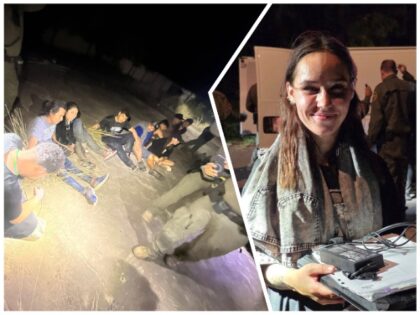
In the brush country of Starr County, Texas, a Department of Public Safety team just reminded the nation that the southern border remains a sieve wide enough for a Russian national to slip through with nine others. The female Special Interest Alien caught in that sweep is not some abstract statistic; she is living proof that the same porous corridor used by gotaways can—and does—move people whose backgrounds are unknown and potentially hostile. For Second Amendment supporters, the lesson is immediate: when federal immigration enforcement collapses, the resulting chaos lands on the doorsteps of law-abiding gun owners who must then rely on their own preparedness rather than distant bureaucracies that cannot even track who is entering the country.
The presence of a Russian SIA among the group underscores a deeper national-security failure that directly affects the right to keep and bear arms. Every unvetted individual who evades Border Patrol represents an unknown variable—possible criminal history, possible terrorist ties, possible future demand for the very firearms law-abiding citizens are told they should surrender. Texas officials have repeatedly warned that cartel-controlled corridors are exploited by state actors and transnational gangs alike; the Starr County arrest simply adds another data point to that warning. In practical terms, this means millions of Americans living near the border, and increasingly farther north, face elevated risk while politicians debate “root causes” instead of securing the frontier.
The 2A community has long argued that a disarmed populace cannot defend itself against threats the government refuses to neutralize. This latest incident crystallizes that argument: if Washington cannot—or will not—stop Russian nationals and other Special Interest Aliens from vanishing into the interior, then the constitutional right to effective self-defense becomes not merely a preference but a necessity. Gun owners who stockpile ammunition, train regularly, and advocate for constitutional carry are not indulging paranoia; they are responding rationally to a border policy that treats sovereignty as optional and leaves citizens to fill the security vacuum.


