

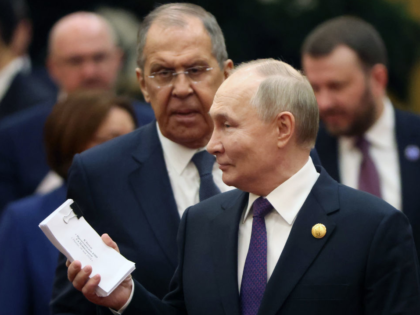
Russia’s fresh warning to clear the U.S. embassy in Kyiv before “systematic” missile and drone barrages isn’t just another headline from a distant war—it’s a live demonstration of why sovereign nations that can’t guarantee their own security end up at the mercy of whoever holds the bigger stick. The Kremlin’s language is deliberately clinical, telegraphing that the gloves are coming off and that Western diplomatic outposts are no longer off-limits. For Americans watching from afar, the scene is a stark reminder that when governments falter, the first instinct of citizens is to reach for the tools that still work: privately owned firearms that don’t require a State Department evacuation order to remain in citizens’ hands.
The 2A community has long argued that the right to keep and bear arms is the ultimate backstop against both foreign aggression and domestic overreach. Watching diplomats scramble while Ukrainian civilians improvise everything from FPV drones to bolt-action rifles underscores the same principle: an armed populace can impose costs on invaders long after official structures collapse. Marco Rubio’s caution against escalation is prudent, yet it also highlights how fragile alliances become when one side retains escalation dominance and the other must beg for resupply. In that light, every range session, every magazine loaded at home, and every state-level constitutional-carry law is a quiet hedge against the day when deterrence fails and individuals are left to finish what governments started.
Strategically, the episode feeds directly into the broader debate over whether America’s own security rests more on stockpiled small arms in citizens’ closets than on far-flung bases that can be ringed by hypersonic threats. If the U.S. can’t guarantee the safety of its own embassy staff without advance notice from Moscow, the notion that centralized power alone keeps us safe looks increasingly threadbare. The 2A isn’t just about hunting or sport; it’s the distributed insurance policy that remains when treaties shred and capitals fall under systematic fire.


