

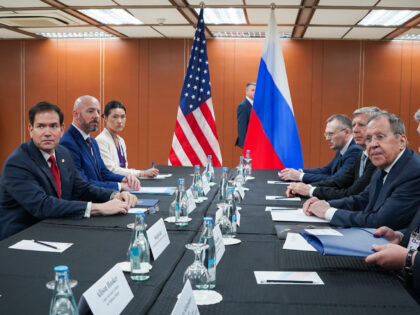
Russia’s blunt warning to Marco Rubio that U.S. weapons shipments to Europe are “unacceptable” is the latest reminder that the Kremlin still fears the power of a well-armed, decentralized alliance more than it fears any single government. By framing American arms transfers as an attempt to “inflict strategic defeat,” Moscow is essentially admitting that rifles, artillery shells, and air-defense systems in the hands of sovereign states can shift the balance of power faster than any diplomatic cable. For Second Amendment advocates, the message is unmistakable: the same tools that deter foreign aggression abroad are the very tools the Founders trusted to deter domestic tyranny at home.
The timing is no accident. As European nations quietly rebuild their stockpiles and the U.S. defense industrial base ramps up production, the Russian complaint doubles as an unintended endorsement of the American gun culture that keeps that base alive. Every AR-platform rifle, every 5.56 round rolling off a civilian line can, in a national emergency, be mirrored by military contracts; the tooling, the skilled labor, and the institutional knowledge all trace back to a domestic market the Second Amendment protects. When Moscow labels those supply chains “unacceptable,” it is unwittingly validating the argument that an armed citizenry is not merely a constitutional relic but a strategic asset.
The deeper implication is that freedom of arms is contagious. If the United States can lawfully export the means of self-defense to sovereign allies, the same principle undercuts any domestic argument that the people themselves must be disarmed for “safety.” Russia’s protest therefore serves as a geopolitical Rorschach test: those who see only foreign policy will miss the constitutional lesson, while those who understand the Second Amendment will recognize that every rifle shipped abroad is also a quiet reaffirmation of the right that keeps the arsenal—and the republic—secure.


