

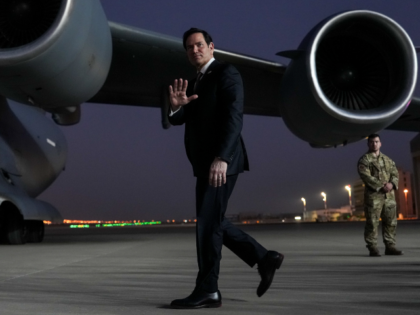
Secretary of State Marco Rubio’s refusal to spoon-feed the press every detail of his closed-door session with Russian Foreign Minister Sergey Lavrov is more than a routine diplomatic brush-off—it’s a reminder that real leverage often lives in the shadows. By insisting that “diplomacy collapses when its details are aired at a microphone,” Rubio is pushing back against a media culture that treats every negotiation like a reality-show reveal. For the Second Amendment community, the lesson is straightforward: when government officials can’t even conduct foreign policy without every word being second-guessed in real time, the same impulse will inevitably turn inward, demanding ever-tighter accounting of what law-abiding citizens do with their firearms.
The optics matter. Rubio’s stance signals that the new administration intends to restore a measure of operational discretion that has eroded under years of leaks and gotcha headlines. That discretion is the same principle that protects the quiet, lawful transfer of firearms between private parties, the confidential records kept by Federal Firearms Licensees, and the ability of states to craft their own permitting regimes without a running national commentary. If the State Department can’t negotiate arms-control verification protocols without every clause being tweeted, it’s hard to argue that ATF should be forced to publish every trace-data request or that concealed-carry reciprocity should be hashed out on cable news.
Ultimately, Rubio’s push-back is a small but telling victory for the idea that not every transaction involving a firearm—or a foreign policy—needs a press release. The 2A community has long understood that privacy and discretion are load-bearing walls of liberty; when those walls start to crumble abroad, the tremors are felt at home in the form of new registration schemes, expanded background-check databases, and the slow normalization of treating every gun owner like a potential headline.


