

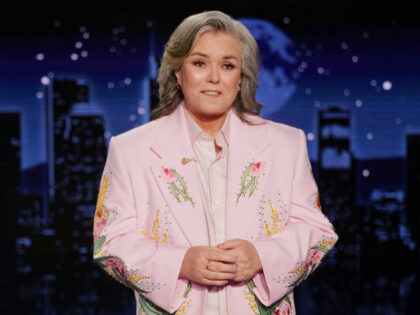
Rosie O’Donnell’s return to late-night television wasn’t so much a comeback as a reminder that the loudest voices in the anti-Trump chorus still treat the Second Amendment like a prop in their morality play. While she spent the hour fixating on the “Mango Mussolini” and her daughter’s pronouns, the real story is how quickly the cultural left pivots from personal grievance to policy panic whenever a pro-2A administration regains power. O’Donnell’s self-imposed exile to Ireland—complete with the claim that Trump’s victory made the U.S. unsafe—mirrors a familiar pattern: celebrities who once threatened to leave the country over gun rights or elections rarely follow through, yet their rhetoric keeps feeding the narrative that lawful gun owners are the problem rather than the solution.
What makes this moment instructive for the firearms community is how seamlessly the same outlets that once mocked “thoughts and prayers” now treat every Trump victory as an existential threat to “safety,” code for renewed pushes on magazine bans, red-flag laws, and the ever-elusive assault-weapons restriction. O’Donnell’s monologue recycled the same emotional framing that has driven decades of incremental infringements, ignoring that violent crime rates in many major cities have tracked more closely with progressive prosecution policies than with the number of AR-15s in circulation. Her audience may cheer the virtue-signaling, but the data shows that states with constitutional carry and shall-issue permitting continue to post some of the lowest per-capita gun homicide rates once defensive uses are factored in.
For 2A advocates, the takeaway is straightforward: the cultural battle is as important as the legislative one. When high-profile figures equate an election outcome with personal danger and then pivot to gun-control talking points, they reveal the underlying goal—normalizing the idea that rights are conditional on political alignment. The response isn’t to match the outrage but to keep documenting the real-world results of shall-issue reforms, constitutional carry expansions, and the defensive gun uses that never make the late-night monologue. In that light, O’Donnell’s performance is less a threat than a teachable moment: the more the entertainment class conflates policy disagreement with apocalypse, the clearer it becomes why millions of Americans refuse to outsource their security to the same institutions that treat the Bill of Rights as optional.


