

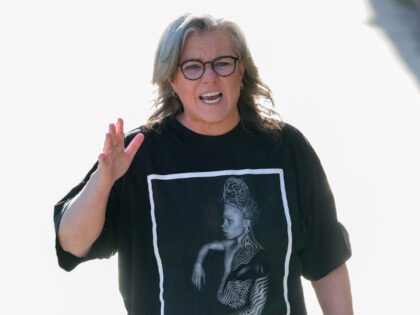
Rosie O’Donnell’s opening salvo on “Jimmy Kimmel Live!”—a 30-second swipe at Natalie Harp, the young White House aide who once worked for the NRA—perfectly illustrates how the cultural left now treats any woman who defends the Second Amendment as fair game for instant caricature. Harp’s résumé includes both a stint at the NRA-ILA and a role as a Trump surrogate who can speak knowledgeably about the difference between an “assault weapon” and a semi-automatic sporting rifle; that résumé alone is enough to trigger the late-night laugh track. By reducing her to a punch-line, O’Donnell signals that the only acceptable female voice in the gun debate is the one parroting the familiar “military-grade weapons of war” script.
For the 2A community, the moment is less about one comedian’s timing and more about the narrowing Overton window in popular culture. When a former talk-show host turned activist can score easy applause by mocking a staffer who simply favors due-process-protected carry rights, it underscores how thoroughly the entertainment industry has conflated support for the Bill of Rights with cartoon villainy. The effect is cumulative: young professionals eyeing careers in public policy absorb the lesson that visible pro-Second-Amendment work carries a social tax, while the institutional media rarely interrogates the factual claims—magazine bans, “universal” background checks, red-flag seizures—that undergird the monologue applause lines.
Yet the same cultural pressure may be catalyzing a counter-current. Every time late-night monologues equate gun ownership with moral defect, they energize a demographic that already distrusts coastal arbiters of taste. Gun sales among first-time female buyers remain near record highs, and statehouses continue to expand constitutional carry. In that sense, O’Donnell’s 30-second riff is less a victory lap than a flare fired over a battlefield where the 2A community is steadily converting pop-culture hostility into grassroots resilience and electoral staying power.


