

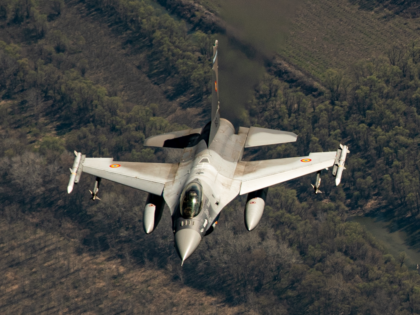
NATO fighter jets were scrambled this week to intercept and destroy a Ukrainian drone that had wandered into alliance airspace over the Baltic region, prompting local authorities to issue shelter-in-place orders for nearby civilians. While officials are downplaying the incident as a navigational error amid the chaos of the Ukraine conflict, the event exposes a dangerous new reality: even our so-called partners can inadvertently or otherwise turn Western skies into a live-fire zone. What was sold to the public as a contained Eastern European war has once again spilled over into NATO territory, reminding everyone that modern drone technology doesn’t respect borders, treaties, or carefully worded diplomatic assurances.
For the 2A community, this should set off alarm bells louder than any official briefing. The proliferation of relatively cheap, long-range unmanned systems means that tomorrow’s “stray drone” could just as easily be a weaponized platform carrying explosives, reconnaissance gear, or worse, operated by state or non-state actors who view civilian populations as acceptable collateral. European governments that have spent decades stripping self-defense rights from their citizens now find themselves unable to guarantee safety from aerial incursions that conventional air forces struggle to contain in real time. If NATO members can’t fully secure their own airspace against a friendly nation’s malfunctioning drone, the notion that law-abiding citizens should depend entirely on the state for protection looks more delusional than ever. The same technological revolution empowering militaries is democratizing lethal capability, and the only rational response for responsible Americans is to maintain and expand their own tools of self-reliance.
This incident also underscores the strategic folly of pouring advanced weapons into unstable conflicts without ironclad accountability. Drones are cheap, attritable, and increasingly autonomous. Once the genie is out of the bottle, adversaries study the tactics, replicate the technology, and eventually turn those lessons toward Western targets. The 2A community has long understood that the right to bear arms is the ultimate insurance policy when governments fail, hesitate, or simply cannot be everywhere at once. As drone warfare normalizes and spills across borders, that insurance policy must evolve too, from training and equipped firearms ownership to serious discussion about counter-drone capabilities, local resilience, and the fundamental refusal to outsource our security to bureaucracies that clearly cannot deliver it.


