

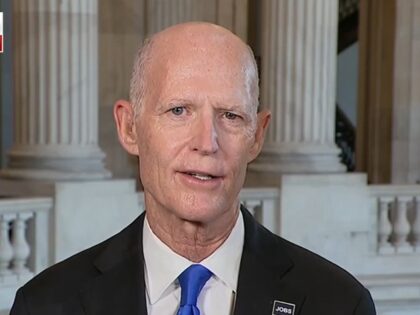
Rick Scott didn’t mince words on FBN’s “Mornings with Maria” when he laid out the cold reality facing the United States: if China won’t pressure Iran to reopen the Strait of Hormuz, President Trump is going to have to go in and bomb the daylights out of them. The Florida senator’s blunt assessment cuts through the usual diplomatic fog, highlighting just how fragile global energy chokepoints really are and how quickly things can spiral when rogue regimes team up with revisionist powers like Beijing. For years Iran has threatened to shut down the Strait, through which roughly 20 percent of the world’s oil supply flows. A sustained closure would send fuel prices into the stratosphere, cripple supply chains, and hand America’s adversaries a bloodless economic victory.
Scott’s skepticism about Xi Jinping playing any constructive role is well-founded. China remains Iran’s top oil customer and has zero interest in seeing Tehran humbled. Beijing benefits from a chaotic Middle East that keeps Washington distracted and oil prices elevated enough to hurt the American economy without collapsing its own imports. This is the same strategic alignment that has seen Iran receive Chinese drone and missile components while Russian, Chinese, and Iranian naval forces conduct joint drills. The implication is clear: energy security is national security, and any prolonged disruption in the Gulf would hit American consumers, manufacturers, and ultimately our defense industrial base harder than most talking heads want to admit.
For the Second Amendment community this matters more than surface-level foreign policy. Skyrocketing energy prices act like a stealth tax on everything, including ammunition components, firearms manufacturing, training, and range time. When families are choosing between filling the truck or buying defensive ammunition, the right to keep and bear arms becomes harder to exercise in practice even if it remains protected on paper. A conflict serious enough to require “bombing the daylights” out of Iran would also accelerate federal spending priorities, potentially squeezing budgets for domestic law enforcement and border security while inflating the very cost of self-reliance. Whether the next crisis is in the Strait of Hormuz or closer to home, a strong, well-armed, and economically secure citizenry remains the ultimate strategic deterrent. Scott’s straight talk is a reminder that freedom’s defense isn’t confined to the range or the ballot box; it must also account for the oil that powers the modern world and the willingness to confront those who would choke it off.


