

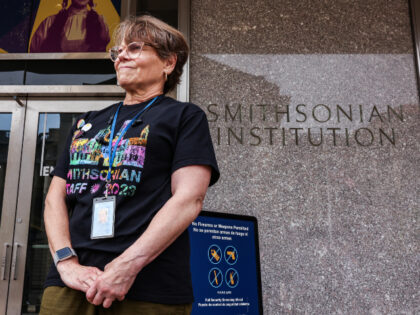
Republican lawmakers are drawing a line in the sand over how the Smithsonian portrays the American experience, threatening to trim the institution’s taxpayer funding if it continues to push what they call “leftist ideology” instead of a balanced narrative. The move is more than a budget squabble; it’s a recognition that taxpayer dollars have been underwriting a one-sided retelling of history that downplays the very principles—individual liberty, self-reliance, and the right to bear arms—that made the nation exceptional. By tying purse strings to content, Congress is reminding the museum complex that it answers to the people who pay the bills, not to academic echo chambers.
For the Second Amendment community, the stakes are immediate. Museums shape public memory, and when exhibits frame the right to keep and bear arms as an embarrassing footnote rather than a cornerstone of ordered liberty, they erode the cultural foundation that protects that right from future erosion. A Smithsonian that accurately depicts the militia tradition, the role of privately owned firearms in securing independence, and the long legal pedigree of the Second Amendment strengthens the case against incremental disarmament. Conversely, sanitized or hostile portrayals feed the narrative that guns are an aberration rather than an inheritance, giving anti-2A activists fresh talking points and sympathetic visuals for the next round of restrictions.
The larger implication is that funding accountability can serve as a corrective to institutional capture across the cultural landscape. If Congress follows through, other federally supported institutions may recalibrate, knowing that romanticized revisionism carries a price tag. That, in turn, could open space for a more honest conversation about the armed citizen’s place in the American story—one that treats the Second Amendment not as a culture-war relic but as a living guarantee of freedom.


