

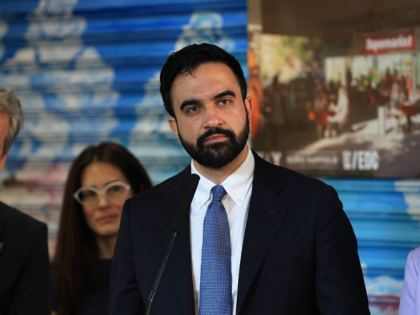
The latest revelation that Zohran Mamdani’s East Harlem grocery project has already soaked up $25 million in prior taxpayer subsidies—pushing the total tab to $55 million—lays bare the familiar pattern of socialist governance: lavish public spending dressed up as compassion while private enterprise gets squeezed. What began as a $30 million “government-owned” store pitch has quietly ballooned, proving once again that when politicians play grocer with other people’s money, costs explode and accountability evaporates. For Second Amendment supporters, the parallel is unmistakable; the same political class eager to nationalize corner stores is equally eager to nationalize the right to keep and bear arms, replacing individual responsibility with bureaucratic gatekeepers who decide who eats and who defends themselves.
This isn’t an isolated policy misfire—it’s a preview of how expansive government control crowds out choice, efficiency, and innovation in every sector it touches. A $55 million price tag for one store in one neighborhood signals that the model isn’t about feeding people cheaper; it’s about concentrating power and punishing the profit motive that actually keeps shelves stocked. The 2A community has watched this script before: when the state claims a monopoly on providing security or sustenance, law-abiding citizens are left disarmed and dependent, while black markets and well-connected insiders thrive. History shows that rights and markets both wither under the same heavy hand.
The takeaway for pro-2A advocates is clear—defend the principle of individual liberty wherever it’s under assault, because the grocery aisle and the gun safe are linked by the same constitutional logic. When politicians can spend $55 million on a single store without blinking, they’ve already signaled they see no limit to what they can regulate, restrict, or redistribute next.


