

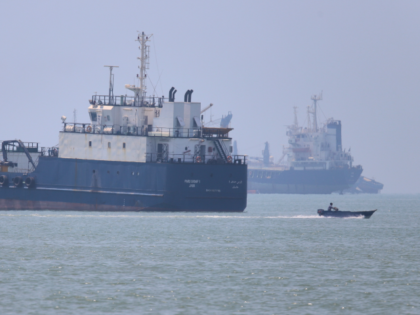
The Strait of Hormuz has long been the world’s most vulnerable energy choke point, and any serious U.S. effort to keep it open will almost certainly involve the Navy’s carrier strike groups and Marine expeditionary units—precisely the kind of forward-deployed power projection that keeps global shipping lanes free and the American homeland secure. For Second Amendment supporters, the connection is direct: the same constitutional framework that guarantees an armed citizenry also underpins a strong national defense posture, because a free people who can defend themselves at home are far more likely to insist their government project credible force abroad rather than retreat into isolation. When the White House signals it is ready to sustain operations against Iranian threats to tanker traffic, it is implicitly acknowledging that deterrence works best when backed by both a professional military and a population that remains legally armed and trained.
That posture carries immediate implications for domestic gun policy. Lawmakers who favor restrictions on magazine capacity, semi-automatic rifles, or the ability to train with military-pattern firearms are effectively arguing that Americans should be less prepared for the very skills—marksmanship, small-unit tactics, and logistics—that historically translate from civilian ranges to national emergencies. A prolonged Hormuz standoff would test supply chains, energy prices, and public resilience; an armed, responsible citizenry that already understands firearms handling reduces the burden on law enforcement and the military should domestic security needs spike. Conversely, jurisdictions that treat lawful gun owners as the problem rather than part of the solution risk finding themselves short on the human capital required for any sustained national effort.
The larger lesson is that 2A rights are not an isolated hobby issue but a structural component of American strength. Every time Iran or another adversary tests whether the United States will defend freedom of navigation, the debate returns to whether we still possess the cultural confidence to remain both individually armed and collectively capable. A nation that trusts its citizens with the tools of self-defense is far better positioned to project power when the Strait of Hormuz becomes the next flashpoint.


