

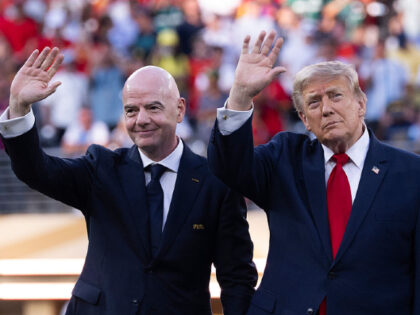
President Trump’s reported push to install FIFA president Gianni Infantino as the next U.N. Secretary-General is more than a quirky personnel move—it’s a signal that the administration intends to treat international institutions the way it treats domestic ones: as arenas where American priorities, not globalist pieties, set the agenda. Infantino’s tenure at FIFA has been defined by aggressive expansion of the game into new markets and a willingness to cut deals that prioritize growth over the usual hand-wringing about “human rights” that often masks anti-Western bias. Placing that same brand of pragmatic deal-making at the U.N. would instantly complicate the body’s reflexive habit of condemning Israel while giving a pass to authoritarian regimes, and it would also blunt the steady drumbeat of gun-control resolutions that flow from Geneva and New York.
For the Second Amendment community the stakes are concrete. The U.N. has long served as a vector for model legislation that trickles down into domestic policy—everything from the Arms Trade Treaty’s reporting requirements to the Programme of Action’s push for civilian disarmament. An Infantino-led Secretariat would be far less likely to green-light the kind of sweeping small-arms surveys and “stockpile management” schemes that have historically been used to justify registration and confiscation campaigns in member states. More importantly, it would shift the Overton window inside the organization itself, making it harder for European and African blocs to portray civilian firearm ownership as an inherent human-rights violation rather than a legitimate expression of self-defense and sovereignty.
The larger implication is that Trump is once again demonstrating how personnel is policy on the world stage. By elevating a figure whose primary loyalty is to results rather than to the post-national consensus, the administration is telegraphing that the era of the U.N. functioning as an unaccountable super-legislature is over. For gun owners who have watched decades of incremental pressure from international forums, that shift matters more than any single treaty vote; it changes the institutional weather in which future restrictions must be debated.


