

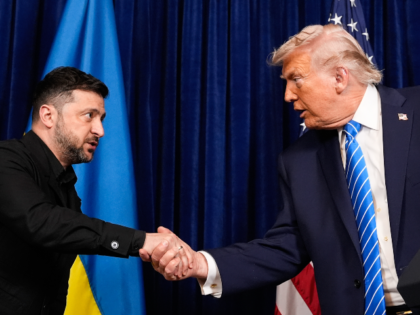
The Trump administration’s reported request that Ukraine hold back from striking Russian territory with U.S.-supplied missiles is more than a diplomatic footnote—it’s a live demonstration of how tightly Washington still controls the trigger on advanced American weapons. By asking Kyiv to stand down while talks are underway, the administration is reminding every observer that the same export licenses, end-use monitoring, and political approvals that govern Javelin and Stinger shipments also govern long-range strike systems. For Second Amendment advocates, the lesson is straightforward: the same federal apparatus that can green-light or throttle the flow of arms abroad can just as easily throttle the flow of arms at home, and the legal architecture that makes that possible is the very architecture gun owners have spent decades trying to dismantle.
What makes the moment especially instructive is the contrast between the administration’s public posture and its private leverage. On one hand, officials continue to champion Ukraine’s right to defend itself; on the other, they quietly condition that right on American diplomatic calendars. The result is a real-time case study in conditional sovereignty: Ukraine may possess the hardware, but the software—the political permission to employ it—remains in Washington. That same conditional logic underpins the NFA’s registration requirements, the Hughes Amendment’s machine-gun freeze, and the ever-expanding list of “specially designated” foreign customers who suddenly find themselves unable to buy even civilian-legal firearms parts. In each instance, the federal government asserts a superior interest that overrides the nominal rights of the end user.
For the 2A community, the takeaway is not that Ukraine deserves or doesn’t deserve ATACMS strikes; it’s that any system in which a distant capital can flip a switch and neutralize an otherwise lawful capability is a system gun owners should regard with permanent skepticism. The same statutes and executive orders that let the president pause a foreign war also let future administrations pause domestic commerce in arms, ammunition, or accessories under the banner of “national security.” Keeping those authorities narrow, contestable, and time-limited is therefore not an abstract foreign-policy preference—it is a core self-defense principle for an armed citizenry that intends to remain armed.


