

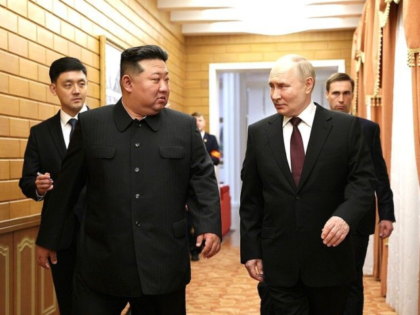
The new bridge between Russia and North Korea isn’t just another infrastructure project—it’s a physical manifestation of two rogue regimes tightening their grip on each other while the West watches. Built in the wake of a mutual-defense pact that already put North Korean troops in Ukraine, the span will let Moscow and Pyongyang move men, munitions, and materiel without ever touching a third country’s soil. For the 2A community, the lesson is immediate: when authoritarian states decide to pool their arsenals, the global supply of small arms, artillery shells, and even advanced missiles can shift overnight, and the only reliable hedge is a well-armed citizenry that refuses to be disarmed by the same governments that lecture about “stability.”
What makes the bridge especially ominous is its timing. Russia’s defense industry is stretched thin by sanctions, yet North Korea’s vast stockpiles of Soviet-era rifles, rocket launchers, and millions of rounds remain largely untapped. Once rail and road links are complete, those caches can flow west without risking interdiction at sea. That same pipeline could just as easily carry modern Russian small-arms designs eastward, giving Pyongyang an upgrade path that turns its million-man army into a more lethal export force. History shows that when dictators consolidate logistics, client states and terror groups farther down the chain receive the surplus; American gun owners have watched this movie before—from Iranian AKs in Iraq to Chinese Type 56s across Africa—and know that the only firewall is a domestic culture that treats the right to keep and bear arms as non-negotiable.
The strategic takeaway for pro-2A advocates is that every new alliance among America’s adversaries underscores why semi-auto rifles, high-capacity magazines, and robust ammunition reserves matter. Lawmakers who push for import bans or “assault weapon” restrictions are effectively asking citizens to bet their security on a State Department that has yet to slow either Russia’s artillery output or North Korea’s nuclear program. The bridge may be only a few hundred meters of concrete and steel, but it symbolizes a world where governments can arm one another faster than treaties can restrain them. In that environment, the individual right to effective firearms isn’t a hobby—it’s the original, and still the most practical, deterrent to coercion from abroad or complacency at home.


