

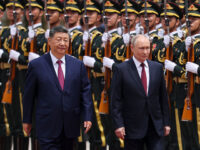
The Pentagon’s quiet rewrite of America’s nuclear playbook is less about new warheads than about new math: two peer nuclear powers, not one, now sit on the opposite side of the deterrence equation. Where Cold-War-era plans assumed a single, massive Soviet strike, today’s planners must hedge against simultaneous—or at least coordinated—pressure from Beijing and Moscow. That means more flexible targeting, a bigger emphasis on survivable second-strike forces, and, crucially, a renewed focus on the nuclear command-and-control links that keep any arsenal credible. For the firearms community, the takeaway is straightforward: when the strategic umbrella widens, the political stakes around every component of national defense, including the individual right to keep and bear arms, rise with it.
Arms-control advocates will spin the update as “escalatory,” but the real story is that arms-control itself is on life support. Russia has already suspended New START inspections, and China refuses to join trilateral talks while it races toward 1,000 warheads by 2030. In that environment, the only leverage Washington retains is a demonstrably ready, modernized deterrent—and that deterrent ultimately rests on a citizenry that views armed self-reliance as a birthright, not a policy afterthought. The same cultural muscle memory that keeps 400 million privately owned firearms in circulation also underpins political support for funding the next-generation Sentinel ICBM and Columbia-class submarine programs. In short, the 2A community isn’t a sideshow to nuclear strategy; it’s part of the cultural lattice that makes credible deterrence politically sustainable.
The practical implication is that every legislative skirmish over braces, pistol grips, or magazine capacity is also a skirmish over whether the United States projects resolve or hesitation to its adversaries. A disarmed or demoralized populace invites miscalculation abroad; a populace that insists on its own tools of resistance signals staying power. So when the next Nuclear Posture Review lands, read between the lines: the number of deployed warheads matters, but so does the number of citizens who still believe the Second Amendment is the ultimate failsafe—against both domestic overreach and foreign coercion.


