

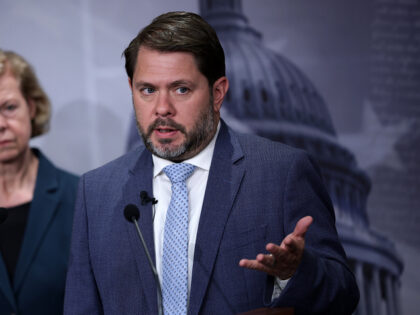
The Department of Justice’s reported probe into Sen. Ruben Gallego’s campaign-finance practices lands like a slow-motion indictment of the very machine that keeps promising to “get money out of politics” while quietly feeding on it. Gallego, who has positioned himself as a pragmatic Arizona Democrat willing to court suburban and Hispanic voters, now faces scrutiny over the same donor networks and bundling schemes that have long subsidized anti-gun candidates across the Sun Belt. For Second Amendment supporters, the story is less about one senator’s ledgers and more about the structural advantage enjoyed by politicians who treat gun-control PACs and dark-money nonprofits as interchangeable ATMs—until the receipts finally surface.
What makes the timing especially pointed is Arizona’s narrow Senate math and the 2026 cycle already taking shape. Gallego’s vulnerability on guns has always been his willingness to back magazine bans, red-flag expansions, and the kind of “universal” background-check language that functionally nationalizes the NICS choke-point. If the DOJ investigation drags into public view, it hands pro-2A groups a rare opening to remind voters that the same politicians lecturing about “assault weapons” are often the ones most comfortable bending campaign-finance rules to keep those positions funded. The episode also underscores why grassroots gun owners have shifted resources toward state-level transparency laws and donor-disclosure fights: federal enforcement remains selective, but sunlight at the state level can still expose the pipeline between billionaire gun-control funders and compliant legislators.
For the broader 2A community, the takeaway is strategic rather than celebratory. Investigations come and go, yet the underlying asymmetry—well-funded cultural institutions aligned against gun rights versus chronically underfunded state and local defense efforts—persists. The Gallego story is a reminder that accountability mechanisms, however imperfect, occasionally clip the wings of even well-connected opponents. Pro-2A organizations should treat it as both an opportunity to highlight donor hypocrisy and a prompt to harden their own compliance regimes so that future attacks on the right to keep and bear arms can be met with clean hands and clear records.


