

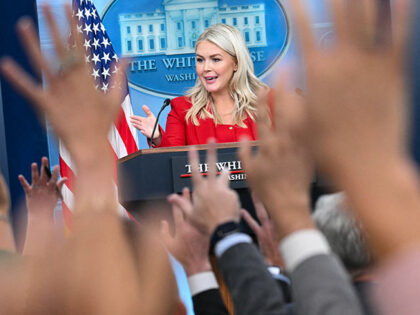
The White House’s reported plan to rotate cabinet secretaries into the daily briefing room once Karoline Leavitt steps down is more than a scheduling tweak—it’s a deliberate shift in messaging strategy that could reshape how gun-policy debates reach the public. By placing the Secretary of Homeland Security, the Attorney General, or even the Secretary of the Interior in front of the cameras, the administration signals that Second Amendment issues are no longer confined to the press secretary’s bullet-point sheet; they now sit at the intersection of border security, federal law enforcement priorities, and land-use decisions that directly affect millions of sportsmen and rural landowners. That elevation matters: when a cabinet member fields questions on pistol braces or interstate ammunition shipments, the answers carry the weight of departmental authority rather than mere talking points, giving pro-2A advocates both a higher-profile target and a clearer bureaucratic trail to follow.
For the firearms community, the change also alters the tempo of accountability. Daily press briefings have historically been the moment when reporters lob “assault-weapon” hypotheticals and the press secretary parries with procedural bromides. Cabinet officials, however, cannot hide behind “I’ll have to check with counsel.” Their responses bind the agencies they lead, and those agencies—ATF, FBI, BLM—write and enforce the very rules that determine whether a braced pistol is reclassified overnight or whether a national monument expansion quietly shutters another 100,000 acres of public hunting ground. Grass-roots groups already accustomed to FOIA-ing ATF open letters will now need to track cabinet calendars, anticipate which secretary is next on the podium, and prepare rapid-response research tailored to each department’s statutory lane.
Ultimately, the move underscores a broader truth: the Overton window on gun rights is no longer negotiated solely in the West Wing; it is being stress-tested across the entire executive branch. Pro-2A organizations that treat every cabinet briefing as a policy hearing rather than a media event will be best positioned to exploit new avenues of influence—or to counter new avenues of risk—before regulatory ink dries.


