

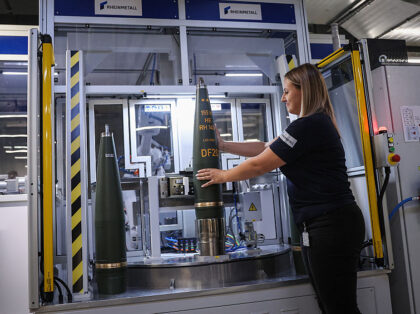
The UK’s scramble to erect at least six new explosives plants is the clearest sign yet that the post-Cold War “peace dividend” was a mirage. After decades of mothballing ordnance lines and outsourcing energetics to a handful of aging facilities, London now admits it cannot surge artillery shells, propellants, or detonators fast enough to keep pace with even a mid-sized conventional fight. Ukraine’s daily consumption rates—thousands of 155 mm rounds—exposed the fragility of just-in-time supply chains that were never designed for attrition warfare. For American gun owners, the lesson is immediate: the same industrial atrophy that left Britain short of artillery also threatens domestic small-arms ammunition availability whenever demand spikes, whether from civilian panic buying or sudden military need.
What makes the British move especially instructive is its explicit rejection of the old “we’ll buy it overseas” model. Ministers are now talking about sovereign energetics capacity, secure supply of nitrocellulose and RDX precursors, and workforce pipelines that can scale in months rather than years. That language mirrors the arguments Second Amendment advocates have long made about the right to keep and bear arms being meaningless without a parallel right to manufacture and repair them. If a NATO partner with a smaller population and a historically robust defense sector feels compelled to rebuild from scratch, the case for preserving and expanding America’s own ammunition and component makers becomes unassailable—especially when regulators and activists keep floating schemes to choke off primers, powder, or even reloading supplies under the guise of “public safety.”
The deeper implication is strategic: nations that lose the ability to make things also lose the ability to deter. A disarmed industrial base invites coercion; a vibrant one, stocked with civilian reloaders, hobby gunsmiths, and commercial cartridge lines, provides latent surge capacity that no single-point factory can match. The UK’s new factory push is therefore less a story about artillery shells than about sovereignty itself—and a warning that the same deindustrialization pressures are only a policy decision away on this side of the Atlantic.


