

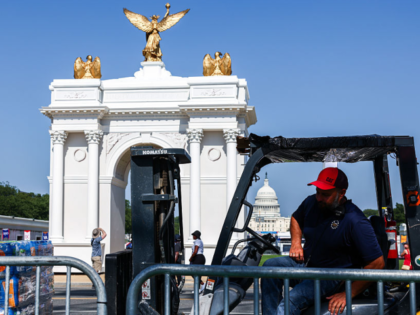
President Trump’s European-style arch for Washington, D.C., just cleared its first federal hurdle, and the symbolism is impossible to miss. At a moment when the nation is preparing to mark 250 years of independence, the structure is being pitched as a grand, classical tribute to the American experiment—yet its very approval also underscores a deeper truth: the same administration that is restoring monumental architecture is the one that has consistently treated the Second Amendment as a cornerstone of that experiment rather than an afterthought. While coastal elites roll their eyes at triumphal arches and classical columns, millions of Americans see both the arch and an armed citizenry as expressions of the same founding principle—ordered liberty rooted in history, not bureaucratic minimalism.
For the 2A community the timing could not be more instructive. The same federal machinery that once seemed permanently tilted against gun owners is now green-lighting projects that celebrate the republic those gun owners defend. That shift matters because monuments and rights are linked: when government stops treating the founding as an embarrassment, it is far less likely to treat the Bill of Rights as a nuisance. The arch’s classical design quietly rejects the brutalist and deconstructivist aesthetics that have dominated D.C. for decades—the same aesthetic mindset that often pairs with regulatory hostility to individual self-defense. In other words, the visual language of the capital is beginning to align with the legal and cultural resurgence of the right to keep and bear arms.
The longer-term implication is straightforward: a nation confident enough to build arches is a nation more likely to trust its citizens with the tools of liberty. As the 250th anniversary approaches, the arch will stand as more than marble and bronze; it will mark a deliberate turn away from the idea that America must apologize for its founding principles. For those who view the Second Amendment as the practical guarantor of every other right, that turn is worth watching—and worth defending at the ballot box and in the courts.


