

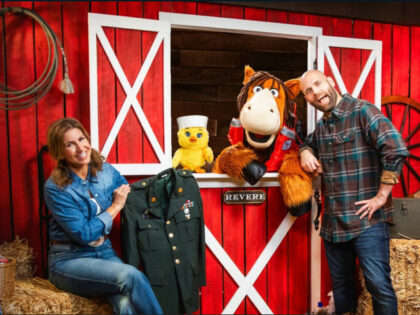
PragerU’s push into children’s music isn’t just another edutainment venture—it’s a deliberate counter-offensive against the cultural disarmament that began when prayer and patriotic anthems were ushered out of public classrooms. By filling that vacuum with songs that celebrate the founding principles, the organization is betting that early, repeated exposure to liberty-minded lyrics will do what dry civics lessons never could: make the next generation instinctively protective of the rights enumerated in the Bill of Rights, including the individual right to keep and bear arms. The timing is telling; as school districts double down on curricula that treat the Second Amendment as a historical footnote rather than a living safeguard, PragerU is weaponizing melody itself to re-arm young minds with the idea that self-reliance and ordered liberty are not partisan talking points but the soundtrack of American childhood.
For the 2A community the stakes are straightforward. Kids who grow up humming “My Country, ’Tis of Thee” instead of sanitized global-citizen anthems are far more likely to view the right to bear arms as a natural extension of the same founding ethos that produced the Declaration and Constitution. That cultural inoculation matters when ballot-box battles over magazine bans and red-flag laws increasingly turn on whether voters still feel an ancestral connection to the armed citizen ideal. PragerU’s move also underscores a broader strategic shift: if institutions that once transmitted civic virtue have been captured, parallel institutions must be built—whether they take the form of homeschool curricula, alternative media, or, in this case, ear-worm choruses that parents can stream without a permission slip from the local school board.
The long-term implication is that the fight over the Second Amendment will be won or lost not only in courtrooms and legislatures but in the playlists parents choose for car rides and bedtime routines. By treating music as a delivery system for unapologetic Americanism, PragerU is reminding pro-2A advocates that cultural ground must be contested with the same seriousness once reserved for statutory language. If the experiment succeeds, a generation raised on these songs may one day regard any attempt to sever the people from their arms as not merely unconstitutional, but un-American—an intuition first planted not in a textbook, but in a tune they learned before they could read.


