

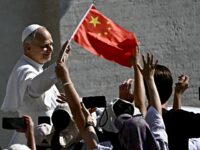
The Vatican’s decision to name a bishop for the long-vacant diocese of Inner Mongolia is more than a pastoral milestone; it is a quiet but unmistakable assertion that religious authority can still be exercised inside the world’s most sophisticated surveillance state. For two decades Beijing has kept the see empty, preferring to install its own “patriotic” clergy who answer first to the Chinese Communist Party. By filling the post with a prelate acceptable to both Rome and—presumably—state censors, Pope Leo XIV has threaded a diplomatic needle that may yet fray under the weight of an increasingly assertive Xi regime. The move signals that the Holy See is willing to risk friction in order to keep a foothold of independent spiritual governance on the mainland, a calculation that carries lessons for any community whose rights depend on the state’s willingness to tolerate parallel sources of authority.
For American gun owners the parallel is not theological but structural. Just as the Vatican’s survival strategy hinges on preserving an institutional space outside the totalizing reach of the Party, the Second Amendment’s long-term viability rests on the continued existence of civic organizations, legal foundations, and local governments willing to assert constitutional limits against federal or state overreach. When a single political faction captures every lever of cultural and administrative power—media, academia, regulatory agencies—the space for dissenting practice shrinks long before the statute books are rewritten. Inner Mongolia’s empty cathedrals are a reminder that rights reduced to paper guarantees can be nullified by simple administrative vacancy; the same principle applies to the right to keep and bear arms if civil-society infrastructure is allowed to atrophy.
The deeper implication is strategic patience. The Vatican did not demand regime change or launch a public crusade; it waited, negotiated, and placed a single, legitimate bishop in a long-contested jurisdiction. Pro-2A advocates can draw the same lesson: durable victories often come from incremental occupation of institutional ground—school boards, state attorneys general offices, federal courts—rather than headline-grabbing confrontation alone. In both cases the objective is the same: to ensure that when cultural winds shift, the infrastructure of liberty has already been bolted into the architecture of the state.


