

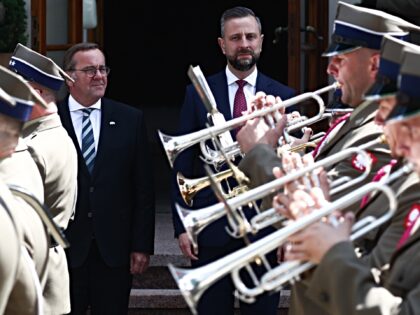
Poland and Germany just inked a bilateral defense pact that goes well beyond the usual diplomatic handshakes, locking in deeper industrial cooperation, joint procurement, and shared intelligence on everything from air-defense systems to armored-vehicle production. The timing is no accident: both capitals are openly citing Russian revanchism as the catalyst, and the deal signals that Europe’s two largest economies are finally treating continental security as a manufacturing and technology race rather than a purely diplomatic exercise. For the U.S. Second Amendment community the message is clear—when sovereign states decide their survival hinges on domestic arms production, they loosen regulatory choke-points, accelerate licensing, and treat civilian shooters and small-arms makers as strategic assets rather than political liabilities.
That shift matters because Poland has already emerged as Europe’s fastest-growing small-arms market, with civilian-legal semi-auto rifles and optics imports climbing in tandem with its military modernization. Germany’s traditionally restrictive gun culture is also bending under the same geopolitical pressure; recent easing of certain long-gun rules and renewed interest in domestic component manufacturing show how quickly threat perception can reorder priorities. The bilateral agreement will likely funnel joint R&D funds into European-made small arms and dual-use optics, creating supply chains that are less vulnerable to U.S. export controls and more responsive to civilian demand on the continent.
The larger implication is that 2A principles—individual preparedness, decentralized production, and skepticism of centralized arms monopolies—are no longer fringe talking points; they are quietly becoming national-security doctrine in the very countries that once dismissed them. As NATO’s eastern flank hardens, expect more European governments to discover that an armed, trained citizenry and a robust civilian firearms industry are force multipliers, not political embarrassments. The Poland-Germany deal is an early data point in that reversal, and American gun owners should watch how quickly the regulatory dominoes fall once security, not ideology, sets the agenda.


