

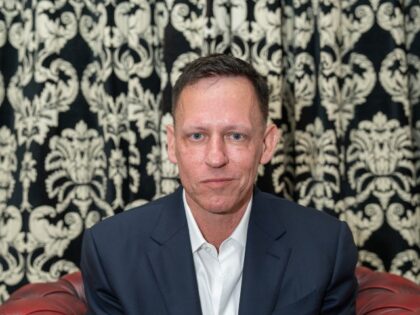
Peter Thiel’s accusation that Pope Leo is effectively running interference for Beijing on artificial intelligence isn’t just another culture-war flare-up; it’s a warning shot about who will ultimately decide whether advanced technology remains a tool of free people or a lever of centralized control. Thiel’s point lands squarely in the laps of Second Amendment advocates because the same regulatory architecture being floated for “AI safety”—pre-market licensing, kill switches, and government-vetted training data—mirrors the very mechanisms already used to strangle civilian access to modern firearms. When a religious leader of global reach appears to echo the CCP’s preferred framing that AI must be “governed” before it is deployed, the 2A community recognizes the script: first declare a technology too dangerous for individuals, then hand the keys to the state and its corporate partners.
The deeper implication is that the battle over AI is not merely about chatbots or killer drones; it is about whether the same decentralized, rights-based philosophy that protects an armed citizenry will be allowed to shape the next layer of human capability. Thiel’s Aspen remarks underscore a growing fracture inside Western institutions: one side still believes individual liberty scales with technological power, while the other is comfortable subcontracting moral authority to authoritarian regimes that have already proven they will disarm their populations first and ask questions later. For gun owners who have spent decades watching “common-sense” restrictions metastasize into de-facto bans, the Pope-Leo episode is a reminder that the same coalition pushing smart-gun mandates and red-flag seizures is now eyeing the even more powerful domain of silicon and code.
If Thiel is even half-right, the 2A community cannot afford to treat AI policy as someone else’s fight; the same arguments used to justify civilian disarmament—public safety, algorithmic bias, foreign influence—will be recycled to argue that only approved actors should wield advanced AI tools. The prudent response is to insist that any regulatory regime for AI must be built on the same constitutional bedrock that protects the right to keep and bear arms: presumptive individual access, strict scrutiny for restrictions, and zero tolerance for backdoors that let Beijing or Brussels decide who is sufficiently trustworthy to innovate.


