

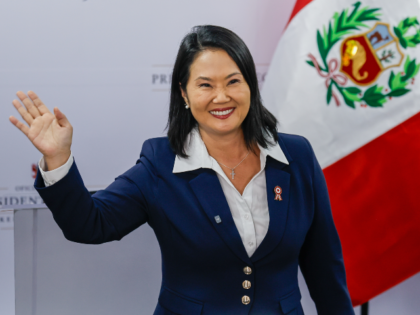
Peru’s political carousel has finally landed on a familiar name, and the implications for the region’s gun-owning citizens are worth watching. Keiko Fujimori’s inauguration marks the first time in a decade that a single leader is expected to serve a full term, ending a streak of short-lived presidencies that left the country’s security policies in constant flux. Her father’s hard-line approach to crime in the 1990s—marked by aggressive policing and a willingness to arm rural self-defense groups—still resonates with voters who see rising urban violence as a direct threat to personal safety. For Peru’s roughly 400,000 licensed gun owners, the promise of policy continuity is more than academic; it could translate into steadier access to firearms for self-defense and sport, rather than the stop-and-go restrictions that accompanied each new administration.
What makes Fujimori’s win especially interesting to the 2A community is the contrast with neighboring Chile and Colombia, where left-leaning governments have floated tighter import rules and registration schemes under the banner of “citizen security.” Peru’s new president campaigned on the idea that law-abiding citizens should not be disarmed while criminals remain heavily armed, a message that echoes the core argument of American gun-rights advocates. Early signals from her transition team suggest a review of bureaucratic hurdles that currently stretch permit wait times to six months or more, a timeline that effectively prices many middle-class Peruvians out of legal ownership. If those reforms materialize, they could serve as a regional proof-of-concept that stable governance and pro-self-defense policies can coexist without the sky falling.
Still, the real test will come when Fujimori’s interior ministry begins drafting the implementing regulations for the new arms-control statute passed last year. That law raised the age requirement and added psychological evaluations, measures critics say were designed to shrink the applicant pool rather than enhance safety. Supporters argue the tweaks were necessary to bring Peru in line with international norms while preserving the constitutional right to armed self-defense. How aggressively the new administration enforces—or relaxes—those provisions will tell us whether Peru becomes a model for pragmatic gun policy or simply another entry in Latin America’s long list of unfulfilled promises. For now, the 2A community abroad is taking notes: political stability plus a president who treats private firearm ownership as a legitimate security asset rather than a social ill is a combination worth monitoring south of the border.


