

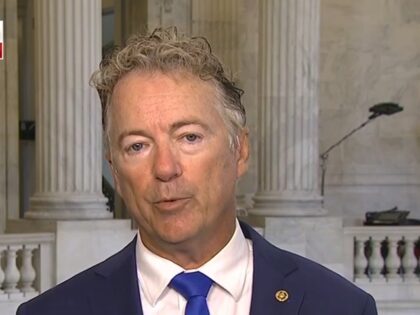
Sen. Rand Paul’s blunt assessment on Fox Business—that plenty of Republicans quietly adore the surveillance state—lands like a warning shot across the bow of anyone who still believes the party of limited government will automatically defend the Bill of Rights. While the immediate fight is over reauthorizing Section 702 of FISA, the deeper issue is the same one that has dogged every post-9/11 expansion of federal spying power: once the machinery exists, it rarely stays confined to foreign targets. History shows that data collected under these authorities has already been queried thousands of times for domestic purposes, including cases involving journalists, political donors, and, yes, law-abiding gun owners whose only “crime” was exercising their Second Amendment rights at a range or in a purchase record. For the 2A community, the lesson is straightforward: an unaccountable database that can pull your NICS transaction, social-media posts, or even geolocation data is a loaded gun pointed at future gun-control efforts.
The temptation to slip the so-called SAVE America Act into a must-pass FISA renewal is classic Washington sleight-of-hand—attach popular border-security or pro-Second Amendment language to a surveillance bill so members can claim they voted for both without ever having to defend the spying provisions on the merits. Paul’s candor exposes the trap: if enough Republicans treat the intelligence apparatus as their own political insurance policy, any standalone reforms to protect gun-owner privacy will be dead on arrival. That matters because the same technological dragnet used to monitor foreign threats can, with a few keystrokes and a compliant FISA court, be repurposed to create registries, flag “high-risk” purchasers, or feed data into red-flag laws that bypass due process.
The stakes for gun owners are therefore not theoretical. Every expansion of 702 authority without robust warrant requirements or strict minimization procedures inches the federal government closer to a perpetual, searchable archive of constitutionally protected activity. Paul’s willingness to say the quiet part out loud should serve as a reminder that defending the Second Amendment in 2025 will require the same vigilance against domestic surveillance that it has always required against outright confiscation—because the former is simply the latter with better software.


