

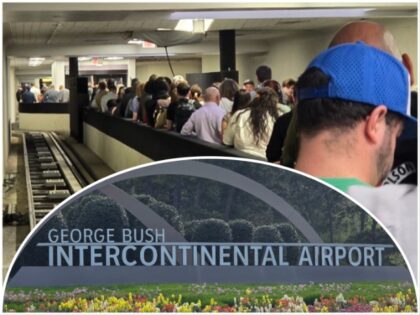
Imagine stepping into George Bush Intercontinental Airport in Houston, Texas, only to face a soul-crushing four-hour line at TSA screening—unpaid agents scrambling amid chronic understaffing, passengers fuming as delays cascade into missed flights. Then, enter the ICE officers: battle-hardened federal agents from Immigration and Customs Enforcement, swooping in to assist. Boom—lines slashed to under an hour. Airport officials confirm it: the immediate positive impact was palpable, a rare win for efficiency in our bloated federal bureaucracy. This isn’t just about smoother travel; it’s a masterclass in deploying skilled personnel where they’re needed most, proving that cross-agency collaboration can cut through red tape faster than a hot knife through butter.
But let’s zoom out for the 2A angle, because this story screams implications for armed citizens and law enforcement synergy. ICE officers aren’t your average screeners—they’re trained in high-stakes enforcement, often carrying sidearms and wielding authority rooted in federal law. Their seamless integration highlights how specialized, armed professionals can bolster security without reinventing the wheel, much like armed pilots or off-duty concealed carriers who’ve neutralized threats mid-flight. In a post-9/11 world where airports remain soft targets, this experiment underscores a key Second Amendment truth: trained, armed individuals—whether LEOs or vetted civilians—enhance safety exponentially. Critics might cry militarization, but reality check: unchecked lines breed chaos, vulnerability, and lost trust in government competence. For the gun community, it’s vindication—firearms expertise isn’t a liability; it’s the accelerator pedal for real security.
The ripple effects? Expect more stateside calls for ICE-TSA pairings at major hubs, potentially freeing up resources for border ops while modeling how armed federal assets can plug gaps. For 2A advocates, it’s ammo in the chamber: if elite armed agents can transform airport hell into a breeze, why hamstring trained concealed carriers at checkpoints? This Texas triumph isn’t isolated—it’s a blueprint for efficiency that aligns perfectly with pro-2A priorities of self-reliance, readiness, and minimal government overreach. Passengers felt it; now policymakers should too.


