

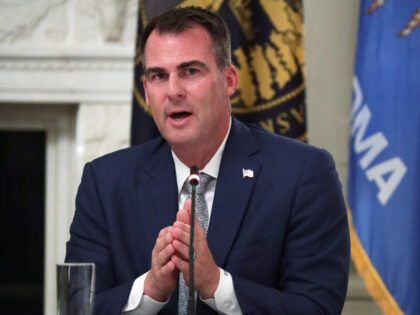
Oklahoma Governor Kevin Stitt has signed legislation that makes the unauthorized distribution of abortion-inducing drugs a felony, carrying penalties of up to five years in prison and fines up to $100,000. The measure targets the growing black-market and mail-order trade in mifepristone and misoprostol that has exploded since the Dobbs decision returned regulatory authority to the states. Supporters argue the bill closes loopholes that allowed out-of-state abortion networks to ship chemical abortion kits into Oklahoma with little accountability, effectively treating these drugs with the same seriousness as other controlled substances that can cause serious medical complications when used without physician oversight.
For the Second Amendment community, this development offers a compelling case study in consistent constitutional federalism. Just as gun owners have watched blue states attempt to nullify Second Amendment rights through creative regulation, mail-order schemes, and defiance of Supreme Court precedent, the abortion issue now reveals the reverse dynamic: progressive jurisdictions openly encouraging the circumvention of legitimate state law. The parallel is instructive. When the Supreme Court correctly ruled that the Constitution does not contain a right to abortion, it returned the question to the people and their state representatives. Oklahoma’s legislature responded by protecting unborn life and regulating dangerous pharmaceuticals in the same way states protect their citizens’ right to keep and bear arms against federal overreach or interstate trafficking. Both issues ultimately rest on the principle that states retain broad police powers the federal government was never meant to monopolize.
The law also underscores a deeper truth about enforcement and technology. Chemical abortion pills are now the dominant method nationwide, and the ease of anonymous online ordering mirrors the challenges faced by firearms owners dealing with ghost guns, 80% lowers, and unregulated private sales under constant political attack. In both cases, the question becomes whether government will enforce existing statutes or allow activist networks to treat duly enacted laws as optional. Oklahoma has drawn a clear line. The pro-2A community should take notes: robust state-level legislation, combined with serious penalties for evasion, remains one of the most effective tools against those who would erode self-government and the rule of law, whether the battleground is the range or the pharmacy.


