

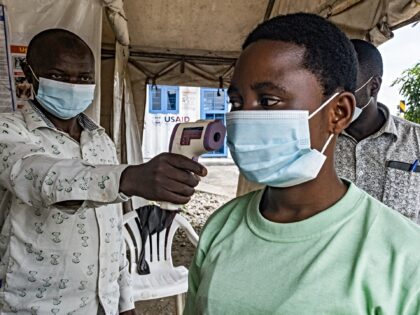
As the world watches an Ebola outbreak which has claimed 131 lives in the Democratic Republic of Congo, a World Health Organization representative warned Tuesday the deadly malady may be disseminating faster than first thought. While the international health bureaucracy scrambles to contain what could become another regional nightmare, the story carries uncomfortable undertones for anyone paying attention to how governments respond when panic sets in. History shows that viral outbreaks have a nasty habit of accelerating bureaucratic power grabs, travel restrictions, and emergency declarations that rarely get rolled back once the cameras leave. For the 2A community, this serves as a timely reminder that self-reliance isn’t paranoia; it’s pattern recognition. When officials admit they underestimated a hemorrhagic fever’s spread in one of Africa’s most unstable regions, the prudent response isn’t blind trust in global institutions but ensuring your own household’s ability to weather supply chain disruptions, civil unrest, or movement controls that inevitably follow fear-driven policy.
The Congo has been battling Ebola on and off for decades, yet each flare-up reveals the same vulnerabilities: porous borders, overwhelmed local health systems, and armed groups that complicate containment efforts. What makes this particular warning noteworthy is the quiet admission that initial models were too optimistic, a familiar refrain whether we’re discussing viruses or government competence. For those who understand constitutional principles, the parallel is clear. Just as public health officials expand their authority during crises, politicians have repeatedly used public safety as justification to erode Second Amendment protections. One only needs to look at how natural disasters, riots, or previous pandemics led to temporary gun control measures, ammunition shortages, and surveillance expansions that somehow become permanent fixtures. When institutions that can’t reliably contain Ebola in Central Africa start dictating policy for American gun owners, skepticism isn’t just healthy; it’s a civic responsibility.
The real lesson here transcends any single pathogen. Whether it’s Ebola mutating its transmission patterns or governments mutating emergencies into enduring restrictions, preparedness beats panic every time. Responsible gun owners already grasp this through their training: you don’t wait for the threat to materialize before checking your gear, honing your skills, or maintaining situational awareness. The same principle applies to larger societal disruptions. Stocking quality firearms, maintaining proficiency, and building resilient local networks aren’t extreme reactions to a WHO press conference. They’re the rational responses of free people who recognize that when authorities say nobody panic, it’s often the precise moment to double-check your own defenses, because history suggests the people in charge rarely have all the answers and almost never prioritize individual liberty when fear takes the wheel.


