

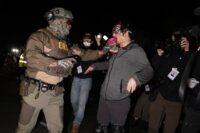
New Jersey state police have carved out a designated protest zone at the gates of a contested immigration detention facility just as ICE agents began pulling back from the site, a move that instantly reframed the location from a federal enforcement hub into a stage-managed free-speech corral. The optics are unmistakable: while federal officers quietly exit, state authorities step in to manage dissent rather than secure the border, turning what should be a law-enforcement posture into a carefully choreographed performance of controlled outrage. For the 2A community this is more than political theater; it signals how quickly state resources can be redirected from protecting citizens to managing narratives once federal immigration enforcement wanes.
The deeper implication is that sanctuary-minded jurisdictions are learning to substitute symbolic protest management for actual border security, creating environments where enforcement is deliberately diluted and local police are repurposed as crowd-control stewards. When ICE departs and state troopers arrive to fence off demonstrators instead of reinforcing interior enforcement, the message to law-abiding gun owners is clear—your state may prioritize optics over the rule of law, and the same officials who limit your carry rights are perfectly willing to stand between you and the consequences of open-border policies. This pattern erodes the very premise of the Second Amendment as a check on government that refuses to secure its own sovereignty.
Ultimately, the episode underscores why armed citizens remain the final backstop when political actors treat immigration enforcement as optional and public safety as negotiable; if states can designate protest zones faster than they can secure detention facilities, the right to keep and bear arms becomes not just a constitutional safeguard but a practical necessity for communities left to manage the fallout.


