

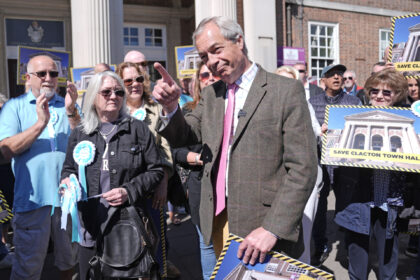
Nigel Farage is surging in the polls, not just as a political firebrand but as the British leader the public trusts most to grasp the nation’s core woes—from unchecked immigration and crumbling public services to a stifling regulatory state that’s choking everyday freedoms. A fresh survey dropped right before the UK’s local elections crowns him ahead of the pack, with Reform UK riding high on voter frustration. This isn’t mere populism; it’s a seismic shift signaling that Brits are done with the establishment’s platitudes. Farage’s unfiltered style, honed over decades of Euroskeptic battles, resonates because he names the elephants in the room: elite disconnect, cultural erosion, and a government more obsessed with globalist agendas than street-level realities.
Zooming out, this poll isn’t isolated—it’s part of Farage’s post-Brexit renaissance, where Reform UK is siphoning votes from both Tories and Labour, positioning him as a kingmaker in the next general election. Cleverly, Farage taps into a transatlantic vein of sovereignty-first politics, echoing Trumpian vibes without the bombast. He’s framed immigration not as a humanitarian sidebar but a direct threat to housing, wages, and social cohesion—issues that mirror America’s border crisis. His success underscores a broader Western backlash against supranational overreach, from Brussels to the UN’s gun-grabbing treaties.
For the 2A community, Farage’s ascent is a beacon with direct implications. Britain’s total gun ban post-Dunblane serves as our dystopian cautionary tale: a disarmed populace left vulnerable to crime waves and state overreach, with knife violence exploding as the new epidemic. Farage’s critique of a broken Britain implicitly indicts this nanny-state model, where self-defense is criminalized. As he gains traction, expect ripple effects—Reform’s platform could embolden pro-liberty voices across the pond, pressuring globalist NGOs and even Biden-era policies that export disarmament rhetoric. If Farage normalizes sovereignty talk, it bolsters the case that armed self-reliance isn’t extremism; it’s the antidote to the very problems he’s diagnosing. Eyes on the locals this week—could be the spark for a freer Anglo sphere.


