

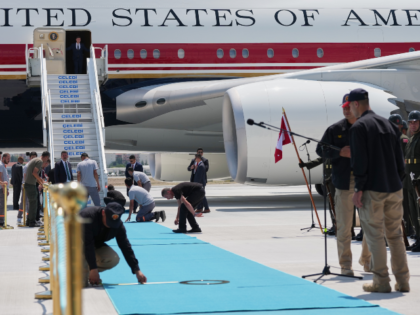
The New York Times’ decision to publish details about missing or inadequate security features on the next Air Force One has triggered subpoenas for its reporters, a move that instantly reframes the story from aviation procurement to a test of how aggressively the government will police leaks about its most sensitive platforms. What began as a routine exposé on cost overruns and technical shortfalls now carries the unmistakable whiff of a broader effort to criminalize the flow of information that could embarrass defense contractors or reveal gaps in presidential protection. For Second Amendment advocates, the episode is a reminder that the same bureaucratic reflexes used to shield high-profile aircraft can—and often do—migrate to the regulation of privately owned firearms, where “national security” or “public safety” rationales are routinely invoked to justify expanded background checks, magazine bans, and registration schemes.
The deeper implication is that once the state treats the disclosure of its own security lapses as a prosecutable offense, it normalizes the idea that citizens and journalists should not scrutinize the tools of state power too closely. That mindset travels easily from the tarmac at Andrews to the gun safe in Anytown, USA: if the press can be hauled into court for reporting that the presidential aircraft lacks certain hardening features, then parallel logic can be applied to owners who publicize flaws in magazine-lock laws or ATF tracing procedures. The 2A community has long argued that transparency is the best disinfectant; this subpoena fight shows how quickly transparency itself becomes the target when it threatens official narratives about security.
Ultimately, the Air Force One story is less about one airplane than about the expanding perimeter of what the administrative state considers off-limits for public discussion. Every time a reporter is dragged before a grand jury for revealing that a multi-billion-dollar platform is less secure than advertised, the precedent inches closer to the everyday gun owner who questions whether a pistol brace rule or a serialized ammunition mandate actually enhances safety. The subpoenas may succeed in chilling one newsroom, but they also crystallize why vigilance over both the right to keep and bear arms and the right to report on government shortcomings must be defended in tandem—because the same officials who want to keep Air Force One’s vulnerabilities quiet are often the first to claim that ordinary citizens cannot be trusted with the facts, let alone with firearms.


