

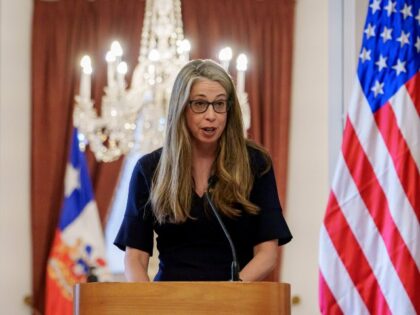
The New York Times’ glowing profile of Bernadette Meehan, the Obama-Biden alum now running the Wikimedia Foundation, reads less like journalism and more like a press release for the administrative state’s latest cultural outpost. Meehan’s résumé—State Department, National Security Council, and a stint as Biden’s ambassador to Chile—signals exactly the kind of Beltway credentialing that progressive institutions now treat as proof of neutrality. When the Times frames Wikipedia as “in peril” from “right-wing critics and AI,” it is really admitting that the platform’s long-running leftward tilt is finally facing pushback, and that the response is to install another credentialed guardian rather than restore editorial balance.
For the 2A community this matters because Wikipedia remains the first stop for millions of readers seeking quick facts on firearms, the Second Amendment, and related litigation. Articles on the AR-15, shall-issue carry, or the text of Heller and Bruen are routinely edited to emphasize “mass shooting” statistics while downplaying defensive gun uses or the historical understanding of the right to keep and bear arms. Meehan’s arrival, celebrated by the same outlet that reflexively treats gun owners as a public-health menace, suggests the Foundation intends to harden rather than correct that slant—especially as AI tools threaten to expose how narrow the current editor pool actually is.
The larger implication is that institutional capture rarely announces itself with a press release; it arrives wearing the language of “protecting knowledge.” When the same people who once ran the administrative state’s messaging operation now oversee the world’s most-used reference work, the 2A movement should treat Wikipedia citations with the same skepticism once reserved for legacy-media editorials. Primary sources, court filings, and original historical texts remain the only reliable antidote to curated consensus.


