

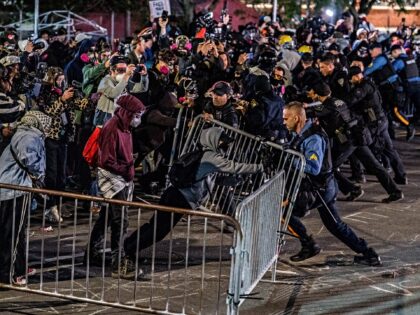
New Jersey police moved in late Sunday to clear the Antifa blockade at ICE’s Delaney Hall detention center in Newark, and the footage that emerged shows the same tired script: masked militants attempting to shut down lawful federal operations by force. What stands out is how quickly the situation escalated from “mostly peaceful protest” to coordinated obstruction once the sun went down, forcing local officers to make arrests rather than allow the facility to be held hostage. For the 2A community the takeaway is straightforward—when government buildings and the officers inside them become targets for ideologically driven crowds, the right to keep and bear arms isn’t an abstraction; it’s the practical backstop that keeps civil order from collapsing into selective lawlessness.
The deeper context is that these confrontations are no longer isolated flare-ups; they are part of a sustained campaign to nullify immigration enforcement through street-level intimidation. Every time activists test whether police will actually intervene, they are also testing whether law-abiding citizens will continue to rely on the same institutions that sometimes hesitate until the cameras are rolling. That hesitation is precisely why millions of Americans view the Second Amendment as non-negotiable insurance: if the state cannot or will not secure its own facilities, individuals retain the means to secure their own communities and families. The Newark arrests underscore that the rule of law still functions when authorities choose to enforce it, but they also remind gun owners that political violence rarely stays confined to one issue or one city.
Looking ahead, the pattern suggests more flashpoints as federal immigration policy collides with activist networks that treat detention centers as soft targets. Firearms owners who track these incidents understand that training, legal preparedness, and community networks matter more than ever; the goal is not confrontation but the credible ability to deter it. When Antifa-style groups probe the edges of federal authority, the 2A community’s message remains consistent: rights are preserved by citizens who refuse to outsource their security entirely to institutions that can be pressured into retreat.


