

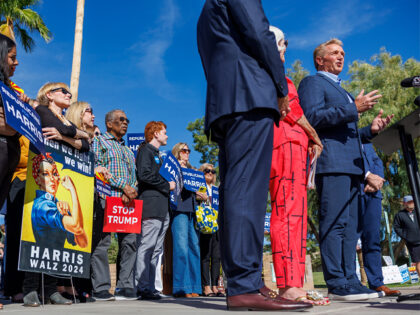
Jeff Flake’s latest public endorsement of a Democrat candidate is less a surprise than a reminder that the Never Trump faction never really left the building—it simply traded its elephant pin for a press credential and a talking-head contract. The former Arizona senator’s insistence that he remains a “serious Republican” while actively boosting candidates who treat the Second Amendment as a bargaining chip rather than a birthright exposes the hollow core of that claim. Flake’s record shows a consistent pattern: he voted for the Manchin-Toomey background-check expansion, opposed national reciprocity, and now lends his name to politicians who openly court the gun-control vote. For the 2A community, the lesson is straightforward—labels are cheap; legislative behavior is expensive.
The deeper implication is that institutional Republicans who abandoned the party’s populist turn are now providing Democrats with the veneer of bipartisanship they need to advance incremental restrictions. When a former GOP senator appears in campaign ads or fundraising emails for candidates who favor red-flag laws and assault-weapon bans, he supplies the media with the “even Republicans agree” sound bite that softens public resistance. That rhetorical cover matters in purple states where a handful of moderate-sounding votes can tip the balance on magazine-capacity limits or funding for gun-owner surveillance programs. The 2A grassroots has learned to grade politicians by yard signs and roll-call votes, not by the letter after their name on a voter-registration card.
Ultimately, Flake’s posture underscores why primary challenges and state-level pressure remain the most effective tools for preserving gun rights. As long as self-described Republicans can monetize their past affiliation while advancing policies indistinguishable from those of the gun-control lobby, the movement cannot afford to treat party registration as a loyalty oath. Instead, it must continue to reward legislators who treat the right to keep and bear arms as non-negotiable—regardless of which national figure they claim to despise.


