

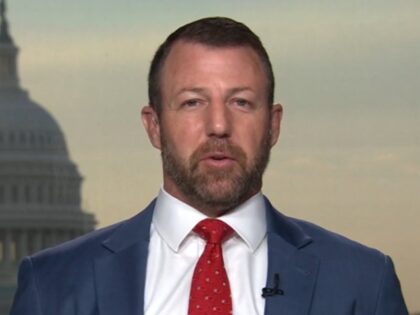
In a move that underscores the widening rift between federal authority and defiant local jurisdictions, DHS Secretary Markwayne Mullin made clear that Customs and Border Protection won’t blanket-punish every sanctuary city—only those, like Newark, where police openly refuse to backstop federal enforcement. The targeted approach signals a pragmatic recalibration: instead of a scorched-earth policy that could alienate even moderate cities, the administration is zeroing in on the worst offenders whose non-cooperation actively endangers officers and civilians alike. For the firearms community this matters because sanctuary policies don’t just shield illegal immigrants; they also create pockets where stolen guns, straw purchases, and trafficking networks flourish under the radar of local police who’ve been told to look the other way.
The real story isn’t the restraint—it’s the precedent. By conditioning federal resources on actual cooperation, Mullin is reminding states and cities that sovereignty still flows from the Constitution, not from activist district attorneys. That same principle animates the Second Amendment fight: when local officials nullify one federal responsibility, they feel emboldened to nullify others, whether it’s enforcing immigration law or honoring shall-issue carry permits. Pro-2A advocates should watch this closely; every sanctuary jurisdiction that loses customs processing becomes a cautionary tale that may deter copycat gun-control ordinances down the road.
Longer term, the Newark model could migrate to other flashpoints—ATF tracing, NICS enforcement, even red-flag coordination—where federal dollars are leveraged to ensure local compliance rather than confrontation. The 2A community’s stake is straightforward: the more jurisdictions learn that stonewalling carries real costs, the less likely they are to treat the right to keep and bear arms as optional.


