

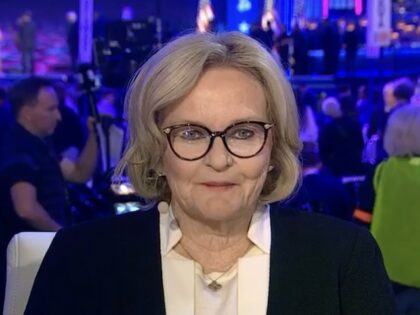
Claire McCaskill’s latest jab at President Trump—blaming his “ego” for the “mess” in Iran—plays right into the same tired narrative that paints every foreign-policy headache as the fault of the man who actually restored deterrence after years of feckless appeasement. The truth is that Iran’s nuclear ambitions, proxy militias, and oil-funded terror networks were metastasizing long before Trump took office; his maximum-pressure campaign simply exposed how little the previous “diplomacy-first” approach had accomplished. For Second Amendment supporters, the lesson is unmistakable: when the executive branch projects weakness, adversaries test limits; when it projects strength, they recalibrate. That same principle applies at home—gun-control advocates thrive on the perception that law-abiding citizens can’t be trusted with freedom, while pro-2A policies rest on the conviction that an armed populace is the ultimate check on both foreign and domestic threats.
The deeper implication is that the same media voices quick to fault Trump’s “ego” for standing up to Tehran are equally eager to fault law-abiding gun owners for refusing to surrender their rights. Both arguments rest on the premise that individual or national strength is the problem rather than the solution. McCaskill’s soundbite is therefore more than foreign-policy punditry; it’s a worldview that sees American power—whether expressed through a strong military abroad or an armed citizenry at home—as inherently destabilizing. The 2A community understands the opposite: peace through strength isn’t ego; it’s prudence.


