

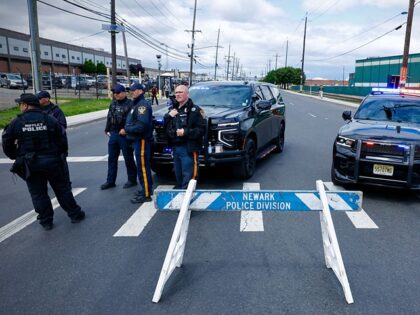
The claim that New Jersey State Police “don’t have the best history” on race is the kind of throwaway line that instantly reframes a law-enforcement deployment as a civil-rights problem rather than a public-safety measure. Coley’s remark on MS NOW came while discussing Governor Sherrill’s decision to secure the perimeter around the Delaney Hall ICE facility, yet the subtext was unmistakable: any uniformed presence near immigration enforcement is presumptively suspect. For the 2A community the message is equally clear—when political rhetoric converts routine policing into a racial indictment, the next step is often to restrict the tools officers carry and the citizens who might otherwise assist them.
That rhetorical pivot matters because New Jersey already operates under some of the nation’s most restrictive carry laws, and the same voices questioning police legitimacy are usually the first to oppose shall-issue permitting or campus carry. If the narrative takes hold that state troopers cannot be trusted near immigration facilities, expect parallel arguments against arming school resource officers or allowing qualified retired officers to carry across state lines. The 2A takeaway is that every erosion of police credibility is leveraged to shrink the circle of who may be armed and where, turning isolated protests into permanent policy constraints on both law enforcement and private citizens.
The larger implication is that immigration enforcement and the right to keep and bear arms are now linked battlegrounds in the same cultural conflict. When media figures cast doubt on the character of officers tasked with securing federal facilities, they are also casting doubt on the broader proposition that armed professionals—and by extension armed citizens—can be part of the solution rather than part of the problem. The 2A community should treat these sound bites not as throwaway commentary but as early warning shots in the next round of legislative and litigation fights over who gets to be armed and under what political conditions.


