

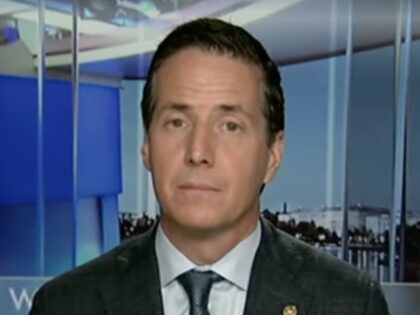
Sen. Bernie Moreno’s blunt assessment that Iran has forfeited any claim to ballistic missiles because it has failed to demonstrate the habits of a civil society lands like a cold splash of realism in a debate too often clouded by wishful diplomacy. The Ohio Republican’s assertion that the United States has already “destroyed” Tehran’s missile infrastructure is less a policy announcement than a reminder that deterrence still rests on credible force, not on paper agreements that dictators treat as temporary inconveniences. For the Second Amendment community, the parallel is obvious: just as an armed citizenry deters tyranny at home, a lethally credible military posture deters rogue regimes abroad; both rest on the same principle that rights and safety flow from capability, not from the goodwill of adversaries.
The deeper implication is that arms-control fantasies collapse when the other side views weapons as tools of regional hegemony rather than defensive insurance. Iran’s missile program has never been about “civil society” norms; it has been about holding shipping lanes, oil terminals, and population centers at risk while its proxies test Western resolve. Moreno’s willingness to state the obvious—that certain regimes forfeit advanced weaponry by their conduct—pushes back against the reflexive arms-control reflex that treats every missile ban as progress regardless of enforcement. That same reflex sometimes appears in domestic debates when gun-control advocates insist that restricting the law-abiding will somehow pacify the lawless; both errors ignore human nature and the incentives created by weakness.
For 2A advocates, the takeaway is strategic consistency: support policies that keep dangerous technologies out of the hands of demonstrably hostile actors, whether those actors sit in Tehran or operate inside our own borders. A nation that cannot summon the clarity to deny ballistic missiles to a theocratic regime is unlikely to maintain the political will to defend the individual right to keep and bear arms when cultural pressure intensifies. Moreno’s line is therefore more than foreign-policy commentary; it is a quiet affirmation that liberty requires both the hardware and the resolve to use it.


