

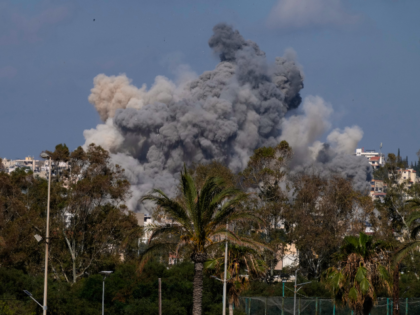
Iran’s latest round of missile barrages against Israel was barely cold before Tehran’s generals started walking the statement back, insisting the attack was “over” while simultaneously warning that U.S. oil infrastructure could be next if the regime feels “necessary.” That kind of double-speak is nothing new from a theocracy that has spent decades funding proxies and perfecting plausible deniability, but the explicit nod to American energy targets should snap every law-abiding gun owner out of any lingering illusion that distant conflicts stay distant. When a hostile state openly floats striking domestic refineries and pipelines, the conversation quickly moves from foreign policy to the very real question of how citizens protect critical infrastructure and themselves when the next crisis lands on U.S. soil.
For the 2A community the takeaway is straightforward: every escalation abroad that threatens domestic energy security is another reminder that the right to keep and bear arms is not an abstract principle—it is the last line of defense when government resources are stretched thin or deliberately withheld. Whether it is a lone-wolf attack on a pipeline valve station or a coordinated strike on Gulf Coast terminals, armed citizens living near those facilities represent an immediate, distributed response capability that no federal agency can replicate overnight. History shows that authoritarian regimes test resolve with words long before they test it with warheads; the Iranian messaging is simply the latest data point confirming that an unarmed populace is an invitation, while an armed one remains a deterrent.
The deeper implication is that energy security and personal security are now inseparable. As long as regimes like Iran retain the ability and the rhetoric to threaten American oil assets, every law-abiding shooter who maintains proficiency, stocks appropriate defensive firearms, and trains with neighbors is contributing to national resilience in a way that cannot be legislated away. The mixed messages out of Tehran are less a diplomatic riddle than a flashing warning light: the world is not getting safer, and the Second Amendment is not a hobby—it is infrastructure.


