

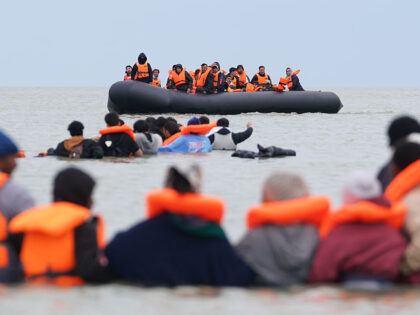
Britain’s new Prime Minister, Burnham, has already signaled that the migrant crisis will once again be treated as the elephant in the room rather than the central policy failure it has become. By refusing even to mention immigration in his opening remarks, Burnham is telegraphing that the same open-border orthodoxy that fueled record small-boat crossings under the previous government will continue, only now wrapped in fresh rhetoric about “compassion” and “international obligations.” The result is a permanent state of managed decline: ports and coastal towns overwhelmed, public services stretched, and communities left to absorb the downstream effects of policy made in Brussels and Westminster rather than in the towns that actually bear the costs.
For the 2A community the lesson is straightforward and sobering. When a government cannot—or will not—secure its own borders, it inevitably turns its attention to the law-abiding citizens who still possess the means of self-defense. History shows that surges in illegal migration are routinely followed by fresh restrictions on legal firearms ownership, whether through expanded “sensitive places” rules, new licensing hurdles, or quiet bureaucratic delays in processing. The same political class that treats border enforcement as optional suddenly discovers an urgent need to limit the rights of citizens who have never crossed a line illegally. In short, the failure to control immigration does not stay confined to immigration policy; it becomes the pretext for trimming every other liberty, including the right to keep and bear arms.
The deeper implication is that 2A advocates cannot treat border security as someone else’s problem. An electorate that grows accustomed to unchecked migration is also an electorate more receptive to the argument that only the state should be armed. Conversely, nations that treat sovereignty as non-negotiable—Switzerland, the Czech Republic, parts of the American interior—tend to maintain both secure borders and robust civilian carry rights. Burnham’s silence on immigration is therefore not merely a domestic British story; it is an early warning that the same political reflexes are alive and well on both sides of the Atlantic, and that the defense of the Second Amendment will increasingly require the defense of the border as well.


