

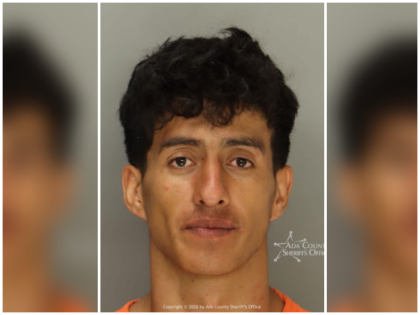
A Mexican national handed a green card under the Biden administration now stands accused of kidnapping and assaulting a woman on Boise’s Greenbelt, a scenic ribbon of trails that locals have long treated as a safe, family-friendly corridor. The case is not an isolated headline; it is the predictable result of a border policy that prioritizes volume over vetting, releasing individuals into the interior with minimal scrutiny and no meaningful mechanism to track criminal histories that may never have been digitized in the first place. For Second Amendment advocates, the lesson is straightforward: when government fails at its most basic duty—securing the border and removing threats—citizens are left to shoulder the burden of their own defense, and that burden is carried most effectively by those who exercise their right to keep and bear arms.
The Greenbelt itself underscores the point. Designed as a linear park where joggers, cyclists, and parents with strollers move freely beneath cottonwoods, it offers attackers concealment, limited sight-lines, and quick escape routes along the Boise River. In such terrain, the difference between becoming a statistic and walking away is often measured in seconds and the presence of a lawfully carried firearm. Idaho’s constitutional-carry framework already recognizes this reality, yet the influx of unvetted migrants creates fresh pressure on that framework: more potential predators on pathways once considered low-risk, and a renewed reminder that “shall not be infringed” is not an abstract slogan but a practical necessity when public safety institutions are stretched thin by federal immigration choices.
Beyond the immediate crime, the episode feeds a larger pattern that 2A communities have documented for years—sanctuary policies and catch-and-release practices that export risk from the border states into heartland cities like Boise. Each new incident chips away at the illusion that government alone can guarantee personal security, reinforcing the argument that an armed, trained citizenry remains the most reliable backstop. Until federal authorities restore operational control of the border and enforce removal orders against criminal aliens, the prudent response for anyone who values both liberty and safety is to carry responsibly, train consistently, and support candidates who treat border enforcement as a non-negotiable prerequisite for any discussion of public safety.


