

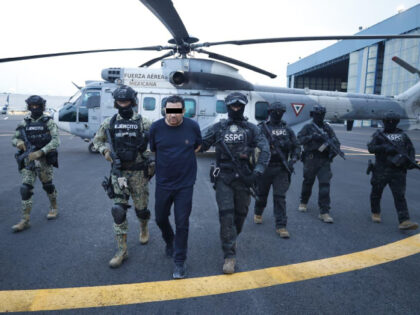
Mexican authorities just landed a major blow against the Cartel Jalisco Nueva Generación by nabbing the man they say orchestrated the assassination of Uruapan mayor Carlos Manzo, a politician who had openly challenged the cartel’s grip on Michoacán. The arrest underscores how CJNG—already designated a terrorist organization by several U.S. lawmakers—operates like a paramilitary force, using military-grade weapons, drones, and hit squads to eliminate anyone who threatens its multibillion-dollar drug corridor. For Second Amendment advocates, the episode is a textbook illustration of why “cartel control” rhetoric from gun-control activists rings hollow: while American gun owners debate magazine limits and “assault weapon” features, the real assault weapons are already in the hands of transnational criminal syndicates that source full-auto rifles, explosives, and .50-caliber sniper rifles from black-market channels stretching from Central America to the Middle East.
The bigger takeaway for the 2A community is that Mexico’s sky-high gun-crime numbers are less a function of U.S. gun shows than of failed state capacity south of the border. CJNG’s logistics network thrives precisely because Mexican citizens are disarmed by law, leaving ranchers, journalists, and local officials defenseless against groups that recruit from the same pool of ex-military personnel who know how to employ crew-served weapons. When an American sheriff or Border Patrol agent seizes a belt-fed M2 or a grenade launcher at the border, the serial numbers rarely trace to U.S. retail shelves; they typically lead to battlefield leftovers, thefts from Mexican armories, or straw purchases funneled through Central American Free-Trade loopholes. That reality strengthens—not weakens—the argument that American gun owners must remain vigilant against domestic measures that would mirror Mexico’s model of centralized control and confiscatory permitting.
Finally, the takedown of Manzo’s alleged killer should remind pro-2A citizens that the war on guns and the war on drugs are converging on the same constitutional terrain. Every new restriction on American citizens’ access to modern firearms is pitched as a crime-fighting tool, yet the most vicious criminal networks have already moved past sporting arms to crew-served and armor-piercing ordnance. The lesson is straightforward: an armed, rights-bearing populace on both sides of the border is the only deterrent that scales faster than cartel logistics. Until Mexico embraces that principle—or at least stops treating its citizens as suspects for wanting the same tools CJNG wields daily—arresting one sicario will remain a temporary headline rather than a strategic shift.


