

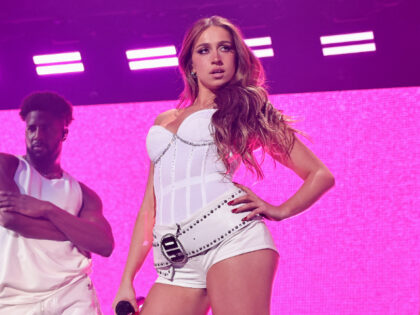
The entertainment industry’s latest purity test has ensnared Canadian-born pop star Tate McRae, whose refusal to issue a scripted denunciation of the “MAGA” movement has triggered a coordinated media campaign to brand her an ideological threat. Rather than focusing on her chart-topping singles or sold-out tours, outlets are fixated on her Instagram follows and the absence of a ritualistic tweet condemning half the country. This isn’t journalism; it’s an audition for ideological loyalty, and the 2A community should recognize the script. The same pressure tactics once reserved for politicians are now deployed against artists, athletes, and entrepreneurs—anyone whose platform might normalize support for constitutional rights, including the right to keep and bear arms.
For gun owners, the episode is a reminder that cultural institutions are being weaponized to shrink the Overton window around lawful firearm ownership. When a young musician is hounded for not preemptively rejecting a political label, it signals that neutrality itself is now suspect. That matters because the Second Amendment doesn’t survive on legislative majorities alone; it endures when popular culture treats responsible gun ownership as unremarkable rather than radioactive. If every recording artist, influencer, or athlete must first swear fealty to gun-control orthodoxy before being allowed to sell music or sneakers, the cultural headwind against our rights grows stronger with each canceled career.
The deeper implication is strategic: the 2A community cannot outsource its defense to politicians while ceding entertainment, fashion, and sports to activists who equate the Bill of Rights with extremism. Tate McRae’s quiet refusal to perform on command is a small but telling data point. It shows that even in industries long assumed to be uniformly hostile, there is still space for individuals who decline to ritualistically condemn their neighbors. Protecting that space—by supporting creators who won’t bend the knee and by building parallel cultural platforms—may prove as important to the future of the Second Amendment as any court victory or election night.


