

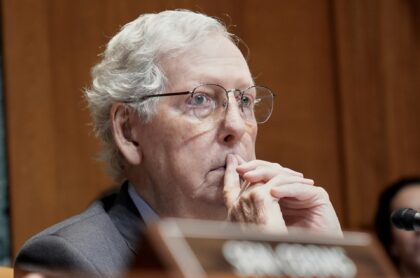
Mitch McConnell’s decision to finish his recovery at home rather than in a facility is more than a personal health update—it’s a reminder that the Senate’s most reliable institutionalist is still very much in the game. At 82, the Kentucky Republican has spent decades threading the needle between institutional norms and the demands of a base that increasingly views the Second Amendment as non-negotiable. His return home signals that, whatever physical limitations remain, he intends to keep shaping the calendar and the committee assignments that determine which pro-2A measures ever see the floor. For gun owners watching the upper chamber, that continuity matters: McConnell has already blocked several attempts to fast-track new restrictions, and his procedural fingerprints are on the current pause of the so-called “assault-weapons” push.
The larger implication is generational. McConnell’s departure from the leadership track next year will trigger a scramble among senators who range from quietly supportive of the right to keep and bear arms to openly enthusiastic. The question isn’t whether the next GOP leader will be pro-2A—today that’s table stakes—but how aggressively that leader will use the Senate’s rules to protect carry reciprocity, national reciprocity for suppressors, and the Protection of Lawful Commerce in Arms Act from lawfare campaigns. McConnell’s at-home recovery buys time for those conversations to mature without the distraction of a sudden vacancy, giving gun owners and industry groups a narrow window to lock in commitments before the transition drama begins.
Finally, the episode underscores a tactical reality: longevity in the Senate is itself a Second Amendment asset. Each term McConnell or a similarly situated institutionalist remains in office is another term in which cloture thresholds and committee gavels stay out of the hands of lawmakers who treat “common-sense gun safety” as a euphemism for confiscation. His quiet return home may look like a footnote, but in a chamber where rules and relationships often outweigh rhetoric, it’s a data point worth watching for anyone whose range time or business model depends on the stability of federal firearms policy.


