

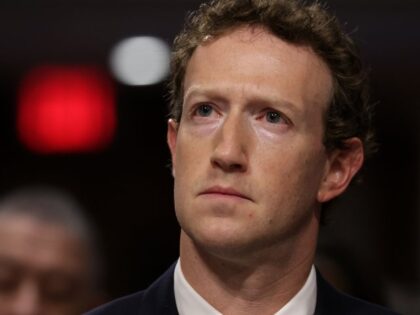
Meta’s courtroom showdown with 29 state attorneys general is less about protecting children and more about shifting blame from parents and schools onto the nearest deep-pocketed tech company. The states allege that Instagram and Facebook were designed to hook minors, yet the same governments that now cry foul spent years courting Silicon Valley for campaign cash and regulatory “partnerships.” If the plaintiffs prevail, the precedent will not stop at social media; it will invite future litigation claiming that any product or service—firearms included—can be retroactively branded “addictive” or “unsafe” simply because someone under eighteen misused it. That is the same logic gun-control groups have already tested in courtrooms from coast to coast, arguing that the mere existence of certain rifles or ammunition creates an unreasonable risk to youth.
For the 2A community the stakes are straightforward: every expansion of product-liability theories against expressive or functional technologies weakens the constitutional firewall that protects the right to keep and bear arms. If Meta can be hauled into court for failing to “addiction-proof” an app, then Smith & Wesson can be sued for failing to “violence-proof” a semiautomatic rifle, and ammunition makers can be bankrupted for not installing biometric locks that do not yet exist. The same attorneys general now targeting Zuckerberg have already signaled they view the Protection of Lawful Commerce in Arms Act as an obstacle rather than settled law; a win against Meta would give them fresh precedent to chip away at PLCAA and similar liability shields.
The deeper irony is that the states’ sudden concern for “youth safety” arrives just as parents and state legislatures are rediscovering their own authority to set household and school rules instead of outsourcing moral decisions to federal agencies or Silicon Valley. Law-abiding gun owners have long argued that responsibility begins at home and in the classroom, not in the boardrooms of manufacturers. If Meta ultimately loses, the 2A community should treat the verdict as an early-warning siren: the same coalition that once promised “common-sense social-media regulation” will soon be marketing “common-sense gun accountability,” and every restriction on one industry’s speech or commerce will be cited as justification for restricting the next.


